


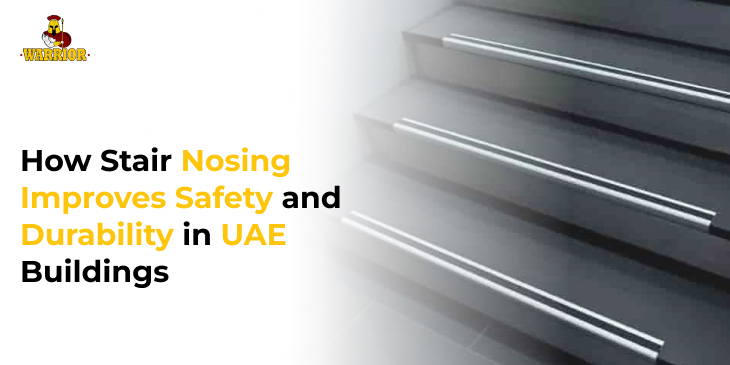
Stairs are everywhere in the buildings of the UAE. You find them in glossy mall atriums, tall residential towers, busy metro stations, and quiet office lobbies. People move up and down them all day, often without a second thought.
The small strip of material at the front of each step is doing a lot of quiet work to keep those people upright and safe. That strip is called stair nosing, and it shapes how a staircase performs for years.
In a place with heavy foot traffic, strong sun, and warm, humid air, that little edge matters more than it looks. A good set of aluminium and FRP stair profiles can take years of use while keeping each step clear and grippy. For architects, contractors, and facility managers, this one detail touches both safety and long-term cost.
The edge of a step is where most stair trouble starts, and it is also where the easiest fix hides in plain sight.
Key Takeaways
Stair nosing improves safety and durability by adding a slip-resistant, high-visibility edge to each step while protecting the tread from wear. In UAE buildings, the right nosing handles heat, humidity, and heavy traffic, helps meet local safety and accessibility standards, and cuts down on repairs over time.
| What It Does | Why It Matters in UAE Buildings |
| Adds an anti-slip surface | Lowers the risk of slips and falls on busy stairs |
| Creates visual contrast | Makes each step edge easier to see |
| Protects the tread edge | Shields corners from chips, cracks, and wear |
| Uses tough materials | Stands up to heat, humidity, sun, and foot traffic |
| Supports code compliance | Helps buildings meet safety and access standards |
| Lowers upkeep | Reduces repair and replacement costs over the years |
Warrior WPS helps developers and facility teams across the UAE protect their stairs with nosing built for the region’s demanding conditions.
What Is the Purpose of Nosing in a Staircase?
Stair nosing is the strip that sits at the front edge of a step, right where your foot lands as you climb or descend. It slightly overhangs the tread below it, and it is usually made from a tougher material than the step itself. That small overhang is doing several jobs at once.
The main purpose is safety. The nosing gives your foot a defined, grippy landing spot. It also marks where one step ends and the next begins, which helps your eyes track the staircase quickly. On a crowded stairwell, that split-second of clarity can prevent a stumble.
Here is what nosing does on a typical staircase:
- Marks the step edge so people can see where to place their feet
- Adds grip through an anti-slip surface or insert
- Protects the tread corner, which is the part that wears out first
- Reduces trip hazards by keeping the edge crisp instead of rounded and worn
- Guides movement in low light, especially when paired with lighting or glow-in-the-dark strips
The word “nosing” comes from the way the step edge “noses” out past the riser below it, which is exactly where feet and wheels take the most punishment.
Without nosing, step edges tend to round off and lose grip over time. That worn corner becomes slick and hard to see, which is a recipe for falls. A proper nosing keeps that edge sharp, visible, and safe for far longer.
Types of Stair Nosing Used in UAE Buildings
Not every staircase needs the same nosing. The right choice depends on foot traffic, indoor or outdoor use, budget, and the look the project is going for. UAE buildings tend to use a handful of common materials, each with its own strengths.
Here are the main types you will come across:
- Aluminium nosing: Strong, corrosion-resistant, and great for heavy traffic. It often carries anti-slip inserts and holds up well in busy commercial spaces.
- PVC nosing: Lighter and budget-friendly, with good grip and a softer feel underfoot. A common pick for schools, offices, and interior stairs.
- FRP nosing: Fibreglass-reinforced plastic offers strong grip and resists moisture and corrosion. It suits wet areas and industrial settings.
- Rubber nosing: Soft, quiet, and shock-absorbing, often used where comfort and noise control matter.
- LED nosing: Built to hold a lighting strip, adding both visibility and a modern look in theatres, cinemas, and low-light areas.
- Photoluminescent nosing: Charged by normal light and able to glow in the dark, which supports safe exits during a power cut.
Among these, aluminium stair nosing is a favourite for large UAE developments because it balances strength, looks, and long service life. It handles the region’s heat and heavy use without warping or fading quickly.
Here is a simple side-by-side view to make the choice clearer:
| Material | Best For | Standout Strength |
| Aluminium | Malls, towers, transit hubs | Durability and corrosion resistance |
| PVC | Offices, schools, interiors | Low cost and easy fitting |
| FRP | Wet or industrial areas | Moisture and chemical resistance |
| Rubber | Comfort and noise control | Soft, quiet underfoot |
| LED | Cinemas, low-light spaces | Built-in lighting and style |
For projects that need a mix, many teams specify a range of aluminium, FRP, PVC, and LED profiles so every staircase in a building gets the right fit. That flexibility helps keep both safety and appearance consistent across a large site.
What Are the Safety Considerations for Stair Nosing?
Safety is the whole point of stair nosing, so it deserves a close look. A few key factors decide how well a nosing protects the people using the stairs. Getting these right matters even more in high-traffic UAE buildings where thousands of feet cross the same steps each day.
Slip resistance comes first. The surface needs enough grip to hold a foot steady, even when shoes are wet or dusty. This is why anti-slip stair nosing with textured inserts or grit finishes is so widely specified. The grip should stay effective after years of wear, not just on day one.
Visual contrast is the next big factor. A nosing in a color that stands out from the tread helps people judge each step at a glance. This is a real help for older visitors and anyone with low vision. Many public buildings favor a contrasting edge strip for exactly this reason.
Here are the safety points worth checking on any project:
- Grip level: Choose an anti-slip surface suited to the traffic and moisture in that area.
- Contrast: Pick a nosing color that clearly stands apart from the step.
- Consistent depth: Keep the overhang even so people can trust each step.
- Secure fixing: Fasten nosing firmly so it never lifts, curls, or becomes a trip hazard itself.
- Emergency visibility: Consider glow-in-the-dark or lit nosing for stairwells and exit routes.
- Even wear: Replace worn strips before the grip and edge fade away.
Quick tip for facility teams: A loose or lifting nosing can be more dangerous than no nosing at all. Regular checks on high-traffic stairs catch these problems early.
Care settings raise the bar even higher. In hospitals and elder-care buildings, staff and visitors may move slowly or use mobility aids, so clear step edges and steady grip are vital. The same thinking that guides PVC handrails in care settings also applies to stair nosing: reduce risk, boost visibility, and support people who need a little more help staying steady.
Warrior WPS supplies anti-slip stair nosing engineered for the grip levels and contrast that busy commercial and healthcare stairwells demand.
How Stair Nosing Adds Durability in High-Traffic Buildings
Safety gets most of the attention, but durability is the quiet hero of stair nosing. The step edge takes the most abuse on any staircase. Every footstep, rolling cart, and dragged bag lands on that corner. Over time, an unprotected edge chips, cracks, and rounds off.
Stair nosing acts like a shield for that vulnerable corner. Instead of the tread taking the hit, the tough nosing absorbs it. This keeps the staircase looking sharp and staying safe far longer than a bare edge ever could.
The durability payoff shows up in a few clear ways:
- Protected corners that resist chips and cracks
- Even wear across the busiest part of the step
- Fewer repairs to tile, stone, or concrete edges
- A longer life for the whole staircase
- A cleaner look that holds up in high-profile spaces
The UAE climate makes this even more important. Outdoor and semi-open stairs face intense sun, high heat, and humid coastal air. Materials that fade, warp, or corrode quickly become a problem. This is why corrosion-resistant options like aluminium and FRP are so popular here. They shrug off heat and moisture that would wear down weaker materials.
In busy transit and retail spaces, the step edge is often the first surface to show age, which is why a durable nosing can quietly keep a whole staircase looking newer for longer.
There is a wider protection story too. The same logic behind stair nosing shows up across a building in products like protective wall guards, which shield walls from the same daily knocks that stairs face. Treating vulnerable edges and surfaces as things worth protecting is smart facility thinking, and it saves money over the life of a building.
Stair Nosing and UAE Building Standards
For B2B projects, compliance is not optional. UAE buildings, especially public and commercial ones, must meet safety and accessibility expectations set out in local building and fire safety codes. Stair nosing plays a direct role in meeting several of them.
Local standards generally push for stairs that are easy to see and safe to use. That includes slip-resistant step surfaces, clear edge visibility, and features that support people with reduced mobility or vision. Well-chosen stair nosing helps a building tick these boxes.
Here is how nosing supports common compliance goals:
- Slip resistance aligns with safety code expectations for stairs
- Contrasting edges support accessibility and inclusive design goals
- Glow-in-the-dark options aid safe evacuation during a power failure
- Consistent, secure fixing keeps stairs free of new trip hazards
A quick note on softness here: exact code clauses and requirements can vary by emirate, building type, and project, so the smart move is to confirm the current rules with the relevant authority or a qualified consultant. What stays true across the board is that quality nosing makes it far easier to hit safety and accessibility targets rather than fighting them.
Note for specifiers: Treat stair nosing as part of your compliance toolkit from the start of a project, not an afterthought at handover. It is far cheaper to specify the right nosing early than to retrofit later.
Key Benefits of Stair Nosing in UAE Buildings
Now for the heart of it. The reason stair nosing shows up in almost every serious UAE project comes down to a stack of real, practical benefits. Here are the ones that matter most for owners, developers, and facility teams.
- Stronger slip resistance. The top job of nosing is grip. A textured, anti-slip edge gives every foot a steady landing, which lowers the risk of slips and falls. On busy stairs, that protection adds up fast.
- Clearer step visibility. A contrasting edge helps people see exactly where each step ends. This reduces missteps, especially in crowds, dim lighting, or for visitors who are less sure on their feet.
- Longer staircase life. By shielding the step corner, nosing keeps the tread from chipping and wearing down. The whole staircase stays safer and looks better for years longer.
- Support for safety and accessibility standards. Nosing helps buildings meet expectations for slip resistance and visible step edges, which supports inclusive, code-friendly design.
- Lower long-term costs. Fewer worn edges mean fewer repairs and less frequent replacement of expensive stone or tile treads. The nosing takes the wear instead. That is a strong case for stair safety solutions as a long-term investment, not just a line item.
- A fit for the UAE climate. Materials like aluminium and FRP resist heat, humidity, sun, and coastal air. They keep performing in conditions that would break down weaker options.
- Better emergency movement. LED and glow-in-the-dark nosing keeps step edges visible during power cuts or smoke-filled exits. That extra guidance can make a real difference when people need to leave quickly.
- A consistent, polished look. Across a large development, matching nosing gives every staircase a clean, uniform finish. That consistency supports both brand image and quality perception in high-end spaces.
Put together, these benefits explain why stair nosing is a standard specification rather than a nice-to-have. It is a small product that protects people, property, and budgets all at once.
Ready to spec the right edge protection for your next project? Warrior WPS offers project quotes, samples, and technical drawings for stair nosing across the UAE.
Choosing the Right Stair Nosing for Your Project
Picking the right nosing is a matter of matching the product to the space. A luxury hotel lobby, a hospital corridor, and an industrial platform all have different needs. A quick, practical approach keeps the decision simple.
Walk through these questions before you specify:
- How busy is the staircase? Heavier traffic calls for tougher materials like aluminium.
- Is it indoor or outdoor? Outdoor and wet areas favor corrosion-resistant aluminium or FRP.
- How much grip is needed? Match the anti-slip surface to the moisture and footwear in that space.
- What are the visibility needs? Consider contrast strips or lighting for low-light or high-risk areas.
- What is the look you want? Balance safety with the finish and style the design calls for.
- What is the maintenance plan? Choose materials your team can inspect and replace easily.
On budget, it helps to think in terms of total cost over the life of the building rather than the price of the strip alone. A cheaper nosing that wears out fast can cost more in the long run through repairs, replacements, and the risk of accidents. A quality nosing that lasts often wins on value even if it costs a bit more up front. Exact pricing depends on material, quantity, and project scope, so a project-specific quote is the best way to compare real options.
On big fit-outs, standardising one or two nosing profiles across the whole building often makes ordering, fitting, and future maintenance far simpler than mixing many different types.
It also pays to think about the building as a whole system. Stair nosing, wall guards, and handrails all protect people and surfaces from the same daily wear. Sourcing them together from one supplier keeps the look consistent and the ordering simple, which is a real bonus on large B2B projects.
Talk to the Warrior WPS team about a stair nosing package matched to your building type, traffic, and finish, complete with samples and technical support.
Installation and Upkeep Basics
Even the best nosing only performs when it is fitted and maintained properly. The good news is that both steps are straightforward once you know what to look for.
Fitting usually happens one of two ways. Some nosing is fixed with screws for a strong mechanical hold, which suits heavy-traffic areas. Other types use strong adhesive for a cleaner look and quicker install. The right method depends on the material, the step surface, and the expected wear. On busy commercial stairs, a secure, screw-fixed nosing is often the safest bet.
Upkeep is mostly about regular checks. Here is a simple routine facility teams can follow:
- Inspect high-traffic stairs on a set schedule for lifting, cracking, or worn grip
- Clean the anti-slip surface so grit and grime do not reduce traction
- Tighten or refix any nosing that starts to loosen
- Replace strips once the grip or edge has clearly worn down
- Log issues so patterns of wear are easy to spot over time
A little routine care keeps stair nosing doing its job for years. Neglect, on the other hand, turns a safety feature into a hazard. For property teams managing large sites, a simple stair inspection checklist goes a long way.
Conclusion
Stair nosing may be one of the smallest features in a building, yet it carries some of the biggest responsibilities. It grips, guides, and protects at the exact spot where feet land the hardest. In UAE buildings that face heavy traffic, strong heat, and humid air, the right nosing keeps stairs safe and looking sharp for years while helping teams meet local safety and accessibility goals.
Choosing quality stair nosing early is a simple, smart move that pays off in fewer falls, fewer repairs, and lower long-term costs.
Give your stairs the edge they deserve. Reach out to Warrior WPS for durable, anti-slip stair nosing built to handle everything UAE buildings throw at it.
Frequently Asked Questions
How long does aluminium stair nosing typically last?
With proper fitting and regular checks, quality aluminium nosing can serve for many years even in busy commercial settings. Its corrosion resistance helps it hold up well against the UAE’s heat and humidity.
Can stair nosing be installed on existing staircases?
Yes, stair nosing can often be retrofitted to stairs that are already in use. Many profiles are designed to fit over existing step edges with screws or strong adhesive, which makes upgrades fairly simple.
What is the difference between stair nosing and a stair tread?
The tread is the flat part of the step you stand on, while the nosing is the protective strip at its front edge. The nosing adds grip, visibility, and protection right where the tread wears out fastest.
Does stair nosing work well on outdoor stairs in the UAE climate?
It can, as long as you choose a material built for the conditions. Corrosion-resistant options like aluminium and FRP handle sun, heat, and humidity better than weaker materials.
How is stair nosing fixed to the steps?
It is usually attached with screws for a strong mechanical hold or with heavy-duty adhesive for a cleaner finish. The best method depends on the material, the step surface, and how much traffic the stairs get.