

Industrial buildings in Oman take a beating every day—from forklifts, cleaning, and even the salty air near the coast. Walls in factories, warehouses, and food plants face constant wear.
Forklifts alone drive many incidents each year—OSHA estimates about 35,000 serious and 62,000 non-serious injuries—so hard wall hits are a real, everyday risk.
When walls start to chip, dent, or stain, it’s more than a cosmetic problem—it can slow work and create safety risks. That’s why smart facilities invest in strong, reliable wall protection.
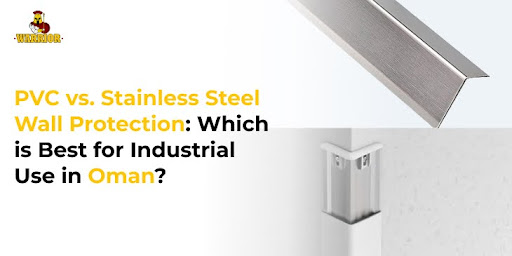
Two top choices stand out: PVC wall protection and stainless steel wall protection. Each one offers strength, safety, and easy cleaning, but they behave differently in Oman’s hot and humid climate.
Before choosing, it helps to understand how each material performs in local conditions and what kind of stress your facility walls actually face.
Why Does Wall Protection Matter in Industrial Spaces?
Walk through any busy warehouse or processing plant, and you’ll notice one thing—walls take a lot of hits. Heavy carts bump into them, equipment scrapes past, and cleaning tools splash water or chemicals. Over time, these small bumps turn into big repairs. That’s where industrial wall protection steps in.
Here’s why it matters:
- Prevents costly damage: Wall protector panels keep walls from cracking, denting, or peeling paint. That means fewer maintenance calls and less downtime for repairs.
- Improves hygiene: In food and healthcare settings, smooth and easy-to-clean panels help keep germs and dirt out of tiny wall cracks.
- Enhances safety: Damaged walls can create uneven surfaces or sharp edges. Protection keeps areas safer for staff.
- Boosts appearance: A clean, well-protected wall gives a professional look to production and storage areas.
Let’s take an example. Imagine a cold storage room where carts and crates move constantly. Without wall guards, the lower section of the wall would soon be scratched and dented. With durable panels or rails installed, those same walls stay smooth and strong for years.
Good wall protection doesn’t simply save money—it keeps facilities looking fresh and easy to maintain. It also helps meet building codes that require cleanable and durable surfaces in industries like food processing and healthcare. In short, it’s a small investment that pays back with fewer repairs and smoother operations every day.
What Makes Oman’s Environment Unique?
Oman has a striking mix of beauty and challenge. The heat can reach over 40°C, and many cities, like Muscat and Sohar, sit near the salty sea air. Inside industrial buildings, this mix of heat, humidity, and salt can be tough on walls and materials.
Here’s what that means for wall protection:
- High heat: Constant exposure to warm air can cause some materials to soften or fade.
- Humidity: Moisture can creep into small gaps, leading to mold or warping.
- Salt exposure: For buildings near the coast, salty air can slowly corrode metal surfaces and damage coatings.
- Intense cleaning routines: Many industries in Oman—like food, beverage, and manufacturing—use strong cleaning agents, which can weaken certain plastics or corrode metal over time.
Because of these conditions, facility managers have to choose materials that can handle both the climate and daily industrial use. For example, stainless steel might hold up better against salty air, while PVC performs well in air-conditioned indoor environments where moisture is controlled.
Even the adhesives used to install panels need to handle temperature swings and humidity. Without that attention to detail, panels can peel or bubble over time. Understanding Oman’s climate helps you pick materials that will stand the test of time—and the weather.
How Are PVC and Stainless Steel Different?
When you compare PVC wall protection and stainless steel wall protection, the biggest difference comes down to what they’re made of and how they react to stress.
PVC (Polyvinyl Chloride):
- Lightweight and cost-effective
- Easy to cut and install
- Resistant to many mild chemicals and cleaning agents
- Works best in controlled indoor areas
- Can soften under extreme heat or fade in direct sunlight
PVC wall guards are popular in offices, hospitals, and dry warehouses because they offer solid protection at a lower price. They’re easy to replace if damaged and come in various colors and finishes that blend into different interiors.
Stainless Steel:
- Extremely strong and durable
- Handles high temperatures and constant cleaning
- Non-porous, so it resists germs and stains
- Ideal for harsh, humid, or coastal areas
- Costs more upfront but lasts for many years
Stainless steel panels and corners are a favorite in kitchens, laboratories, and processing plants that need top hygiene and toughness. They’re harder to dent, and they don’t rust easily—especially the 316 grade, which is designed for marine climates like Oman’s coast.
Both materials can be used for wall protector panels, but the best choice depends on where and how they’ll be used. PVC may suit light-duty indoor walls, while stainless steel is better for heavy-duty or coastal environments.
When planning industrial wall protection, it’s smart to think about the daily conditions. Ask: Will walls face heat, moisture, or chemicals? If yes, stainless steel may be worth the investment. If walls stay dry and clean, PVC might be the practical, budget-friendly choice.
Choosing the Right Wall Protection for Industrial Use in Oman
Picking the best wall protection for a factory or plant in Oman takes a bit of thought. You can’t just look at price or color. You need to think about how your walls are used every day, what kind of wear they face, and how the local climate affects materials over time. The right choice helps your space stay cleaner, safer, and easier to maintain.
Here’s a walk through how to make that decision in a simple, practical way.
1. Start with How Your Facility Works
Every building is different. A food factory has very different needs from a warehouse or a chemical plant. Before choosing between PVC wall protection and stainless steel wall protection, it helps to answer a few key questions:
- How much traffic hits your walls?
If forklifts, trolleys, or pallets bump into walls daily, you need strong, impact-resistant protection. - What kind of cleaning happens?
Frequent washing or the use of strong cleaning chemicals can affect some materials. - Is your site near the coast or in a humid area?
Salty air and moisture can corrode metals and affect adhesives. - How important is hygiene?
Food, healthcare, and lab areas need smooth, easy-to-clean surfaces with no gaps or cracks.
Understanding your environment helps you choose materials that can handle real-world conditions instead of failing after a few years.
2. Matching Material Strength to Workload
Let’s break down how each material handles stress and exposure:
PVC Wall Protection
- Strength and flexibility:
PVC has a bit of flexibility, so it absorbs bumps instead of cracking easily. It’s good for areas with light to medium wall contact—like corridors, storage rooms, or air-conditioned warehouses. - Ease of maintenance:
It’s easy to clean with mild detergents and warm water. You can even replace a single panel if damaged without taking down the whole system. - Temperature limits:
PVC softens when exposed to very high heat, so it performs best indoors and away from direct sunlight or hot machinery. - Cost efficiency:
It’s budget-friendly and quick to install. Many businesses choose it for large interior walls where appearance and durability both matter.
Stainless Steel Wall Protection
- Toughness and lifespan:
Stainless steel is built for heavy-duty areas. It can take strong impacts without cracking and holds up well under harsh cleaning routines. - Corrosion resistance:
Grades like 304 and 316 stainless are highly resistant to rust, especially 316 in Oman’s salty coastal air. - Hygiene and cleaning:
Its non-porous surface means no bacteria or moisture can hide inside. It’s a top choice for food production, pharmaceuticals, and cleanrooms. - Higher initial cost, longer return:
While installation costs more, stainless steel lasts for years without losing its finish or needing replacement.
When deciding between these two, think about the work your walls do every day. PVC offers strong performance for dry, temperature-controlled interiors. Stainless steel is the better choice where durability and hygiene are critical, such as kitchens, labs, or facilities near the sea.
3. Location and Climate: Why Oman Matters
Oman’s unique mix of heat, humidity, and salty air makes industrial wall protection more than a simple purchase—it’s a long-term investment decision. Each region poses slightly different challenges:
- Coastal Areas (Muscat, Sohar, Salalah):
High salt and humidity levels can speed up corrosion. Here, stainless steel—especially grade 316—is the safer option. - Inland or Desert Regions (Nizwa, Ibri):
Extreme heat and dust are common. PVC can handle these areas well if kept indoors and away from direct sun. - Air-conditioned Facilities:
PVC performs best in stable indoor temperatures. If humidity is controlled, it stays strong for many years. - Wet or Sanitized Environments:
If you use constant water sprays or strong disinfectants, stainless steel panels will resist damage much better than plastic materials.
By matching your wall protection to your local conditions, you’ll avoid early wear and enjoy smoother maintenance in the long run.
4. Comparing Installation and Maintenance
How easy it is to install and maintain wall protection can affect your schedule and costs. Here’s how both materials compare:
PVC Wall Protection
- Installs quickly using adhesive or aluminum retainers.
- Lightweight panels reduce labor time.
- Cleaning involves mild soap and water—no special equipment needed.
- Scratches can happen over time, but panels are easy to replace.
Stainless Steel Wall Protection
- Requires precise fitting and professional installation, especially for welded joints or large panels.
- Once installed, it needs little care—just regular cleaning with approved agents.
- Can handle power washing and strong sanitizers used in industrial kitchens or processing lines.
- More resistant to dents and cracks than PVC, but visible scratches may appear after rough contact.
Maintenance is key to getting the most value. For both materials, regular cleaning keeps walls looking professional and prevents buildup of grime or corrosion.
5. Design and Appearance
Function is important, but appearance matters too—especially in customer-facing or clean production areas.
- PVC: Available in various colors and finishes. It can match interior décor or company branding easily. Matte or textured finishes also hide scuffs from everyday use.
- Stainless Steel: Has a sleek, professional look. The brushed No.4 finish is common in industrial spaces and hides fingerprints and small scratches well. In bright facilities, stainless steel also reflects light, making spaces look cleaner.
Both materials can be cut to fit around corners, doors, and machinery. For example, wall protector panels made of PVC are often installed from floor to mid-wall, while stainless steel sheets may be used full height in high-traffic or wet zones.
6. Budgeting for the Long Term
Initial cost often guides decisions, but thinking about long-term value makes a big difference.
- PVC costs less to buy and install, making it ideal for large facilities with controlled environments. However, it might need replacing sooner in harsh or hot areas.
- Stainless steel costs more upfront but can last for decades, especially in high-use or coastal environments where maintenance is minimal.
When comparing the two, look at total lifecycle cost: purchase price + installation + maintenance + replacement. Over ten years, stainless steel can actually become more cost-effective if your facility faces heavy cleaning or exposure.
7. When to Choose Each Type
To make the choice clearer, here’s a quick guide:
Choose PVC Wall Protection if:
- Your facility is mostly indoors and temperature-controlled.
- You need quick installation with minimal cost.
- Cleaning uses mild detergents.
- You want color-matched panels for visual appeal.
Choose Stainless Steel Wall Protection if:
- Your building is near the coast or exposed to humidity.
- You require a high level of cleanliness or use harsh cleaning agents.
- You need extreme durability for high-impact areas.
- You prefer a sleek, polished, industrial look.
In many cases, facilities use a combination—PVC in light-duty corridors and stainless steel in production or wash-down zones. This mixed approach offers strong protection and cost balance.
8. Key Points Before Installation
Before finalizing, it’s wise to plan carefully:
- Measure wall areas accurately to avoid material waste.
- Check substrate condition. Walls must be smooth and clean before applying panels.
- Pick the right adhesive or fastener rated for Oman’s heat and humidity.
- Seal joints properly to prevent moisture or bacteria buildup.
- Schedule regular checks to catch loose edges or damage early.
Good preparation ensures your wall protection lasts longer and performs as expected.
Conclusion
Choosing between PVC and stainless steel wall protection in Oman comes down to environment, budget, and use. PVC works well in dry, controlled spaces and offers an affordable way to protect busy walls. Stainless steel lasts longer in hot, humid, or coastal settings where moisture and salt are constant challenges.
Both materials can transform a facility from worn-out to worry-free. Strong walls mean fewer repairs, better hygiene, and smoother operations—a win for every business owner.
Oman’s climate can be harsh, but your walls don’t have to suffer for it. Whether you pick PVC wall protection or stainless steel wall protection, you’ll be investing in lasting value and peace of mind.
Whichever option you choose, good wall protection saves time, keeps facilities safe, and helps maintain a clean, professional look.
For durable, high-quality products built for Gulf conditions, reach out to Warrior WPS—your trusted partner in wall protection solutions.
FAQs
1. What is the main purpose of wall protection?
Wall protection prevents damage from carts, equipment, and daily traffic, keeping walls strong, clean, and safe in busy industrial spaces.
2. How long does PVC wall protection last?
PVC wall protection can last many years in indoor environments if kept away from direct heat and sunlight.
3. Is stainless steel better near the coast?
Yes. Stainless steel, especially 316 grade, resists corrosion from salty air and humidity better than most materials.
4. Can both materials handle cleaning chemicals?
PVC handles mild cleaners, while stainless steel can resist strong cleaning chemicals used in food and medical industries.
5. Are wall protector panels easy to install?
Yes. Most panels are designed for quick mounting with adhesive or screws, and maintenance is simple once installed.