


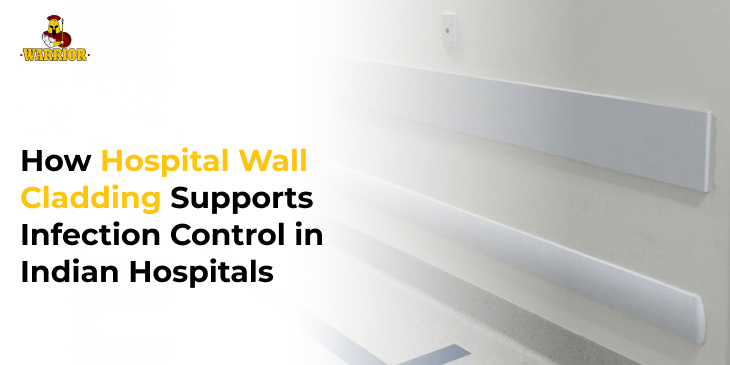
Walls take a beating in any busy Indian hospital. Trolleys bump them, gurneys scrape them, and cleaning crews scrub them several times a day. In a place where patients are already vulnerable, those same walls quietly become part of the safety plan.
This is why hospital wall cladding has become a core decision for facility managers and procurement teams, not an afterthought.
Cladding is a protective surface fitted over the base wall. When it is smooth, sealed, and easy to wipe down, it gives bacteria fewer places to hide.
Many hospitals now pair it with durable hospital wall panels and seamless PVC wall panels that hold up to constant disinfection. The right surface can shape how clean a ward stays, week after week.
Key Takeaways
Hospital wall cladding supports infection control by giving walls a smooth, non-porous surface that is easy to clean and hard for germs to cling to. In hospitals, cladding also protects walls from daily damage, which keeps cracks and chips from becoming hiding spots for bacteria. The best options resist moisture, stains, and strong disinfectants, so surfaces stay hygienic through repeated cleaning.
| Benefit | How it helps infection control |
| Smooth, non-porous surface | Germs have fewer places to settle and grow. |
| Easy to clean | Handles daily wipe-downs and strong disinfectants |
| Impact resistant | Prevents cracks and chips that trap bacteria |
| Moisture resistant | Stops mold and mildew in humid, wet areas |
| Seamless joints | Removes gaps where dirt and germs collect |
What Hospital Wall Cladding Is and Why It Matters in Indian Hospitals
Hospital wall cladding is a protective layer fitted over interior walls in clinical spaces. It is built to take knocks, resist chemicals, and clean up fast. Traditional finishes struggle here. Paint chips and stains under repeated scrubbing. Tile can look clean while hiding a real problem in its grout lines, which soak up moisture and hold soil.
Infections picked up inside hospitals are a serious concern, and the burden falls hardest on lower-resource settings. According to the WHO’s global report, out of every 100 patients in acute-care hospitals, around 7 in high-income countries and 15 in low- and middle-income countries acquire at least one infection during their stay. Walls do not cause these infections, but rough or damaged surfaces make them harder to control.
A single crack in a painted wall can hold moisture and bacteria that survive routine cleaning. Sealed cladding removes that hiding spot, which is one small piece of a much greater infection-control effort.
How Do Hygienic Wall Surfaces Support Infection Control?
Clean walls do quiet work. Hygienic hospital wall solutions support infection control by removing the tiny gaps, seams, and pores where microbes settle. A smooth surface can be wiped clean in seconds and stays clean longer between rounds.
Here is how the right surface helps day-to-day:
- Non-porous finish: bacteria and fungi cannot soak in, so disinfectant reaches them
- Sealed joints: continuous panels and trims close the gaps that grout and drywall leave behind
- Chemical resistance: surfaces handle strong hospital-grade cleaners without fading or cracking
- Moisture resistance: damp-prone zones stay free of mold and mildew
- Impact strength: walls resist the dents and scrapes that turn into germ traps
Good to Know: Some cladding panels carry built-in antimicrobial protection. This does not replace cleaning, but it can help lower the germ load on the surface between cleans.
Choosing Hospital Wall Materials: What Works Best
Picking a surface is a balancing act between hygiene, durability, and cost. The good news is that modern hygienic hospital wall solutions balance easy cleaning with the strength to survive a busy ward.
What Type of Walls Are Used in Hospitals?
Hospitals use a mix of wall types depending on the room. General wards may use painted, sealed plaster. High-risk areas such as operating theatres, ICUs, and labs usually call for sealed, wipeable cladding or panels. Common hospital wall panels and cladding materials include:
- PVC and vinyl sheets
- High-pressure laminate (HPL)
- Stainless steel panels and guards
- Antimicrobial-coated composite panels
Which Material Is Best for Hospital Walls?
There is no single winner. The best material depends on the room, the budget, and how much abuse the wall takes. A quick comparison helps:
| Material | Strengths | Best-fit areas |
| PVC / vinyl | Seamless, moisture-proof, low cost | Wards, corridors, wet areas |
| Stainless steel | Very tough, easy to sanitize | OTs, kitchens, high-impact zones |
| HPL | Durable, wide range of finishes | Patient rooms, public areas |
| Wood-look protection | Warmer look, solid durability | Waiting areas, lobbies |
For corners and high-traffic edges, many facilities add hospital wall protection panels and guards on top of the base cladding. Rigid options like stainless steel wall guards and corner guards absorb the daily hits, while calmer public zones can use wood-look wall protection that stays warm without giving up durability.
Match the material to the room, not the whole building. Spending on stainless steel where trolleys hit hardest and using PVC panels elsewhere often gives better value than one material everywhere.
Meeting Indian Standards for Infection Control
Indian hospitals working toward NABH accreditation are judged in part on clean, safe, and well-kept surroundings. Cleanable, damage-resistant walls make those standards easier to hit and to prove during an audit. This is a direct link between a quiet material choice and formal compliance.
Procurement teams tend to weigh a few practical points when comparing surfaces and hospital wall protection panels:
- Ease of cleaning with approved disinfectants
- Fire performance suitable for interior healthcare use
- Durability that lowers repair and repainting cycles
- Availability of matching trims, guards, and accessories
Suppliers such as Warrior WPS offer wall protection ranges built for these demands. Their breakdown of stainless steel wall guards in healthcare shows how hygiene, durability, and cost play out inside real Indian facilities, which helps teams pick hygienic hospital wall solutions with fewer surprises later.
Fire ratings and cleaning compatibility should be checked against current product test data before purchase, since specifications can change between product versions.
Getting Wall Cladding Right During Design and Installation
Even the best panel fails if it is fitted badly. Gaps at joints, poorly sealed cut-outs, and loose trims can undo the hygiene benefits fast. Strong results come from planning the small details at the design stage, not on install day.
A few things worth locking down before installation:
- Seal every joint and penetration, especially around headwalls carrying oxygen, suction, and power
- Use continuous corners and integrated trims to avoid open seams
- Confirm the surface handles your facility’s disinfectants and dilution levels
- Plan guards and hospital wall protection panels for the spots that take the most impact
Handled well, cladding and hospital wall panels become a low-fuss surface that keeps working for years, with far less patching and repainting along the way.
Skipping proper sealing to save time at install is a false economy. Open seams collect soil and moisture, and fixing them later costs far more than doing it right the first time.
Conclusion
Clean, tough walls are a quiet part of patient safety. Good hospital wall cladding gives Indian hospitals surfaces that resist germs, shrug off daily knocks, and stand up to constant cleaning. It supports infection control, protects budgets, and helps facilities meet the standards they are held to.
The smart move is to match the right surface to each space and fit it well. Warrior WPS builds wall protection with those exact demands in mind.
Ready to protect your walls and your patients? See how Warrior WPS can help your hospital stay cleaner, safer, and audit-ready.
Frequently Asked Questions
How often should wall cladding be cleaned in a hospital?
Cladding in clinical areas is usually wiped down daily as part of routine cleaning, with deeper terminal cleans between patients or procedures. High-risk rooms like operating theatres and ICUs are cleaned more often than general wards.
Is antimicrobial wall cladding worth it for hospitals?
Antimicrobial cladding can help lower the germ load on a surface, but it works best alongside proper cleaning, not in place of it. It is most useful in high-risk areas where every added layer of protection counts.
Can wall cladding be installed without shutting down a ward?
In many cases, yes, since cladding can be fitted in phased sections to keep parts of a facility running. The exact plan depends on the area, the material, and the hospital’s schedule.
Does wall cladding help with NABH accreditation?
Clean, durable, well-maintained surfaces support the hygiene and safety expectations that accreditation reviews look at. Cladding alone does not grant accreditation, but it makes those standards far easier to meet.
How long does wall cladding last in a hospital?
Quality cladding and panels can last many years with routine care, often outlasting paint or tile in high-traffic zones. Lifespan depends on the material, the traffic level, and how well joints are sealed and maintained.