


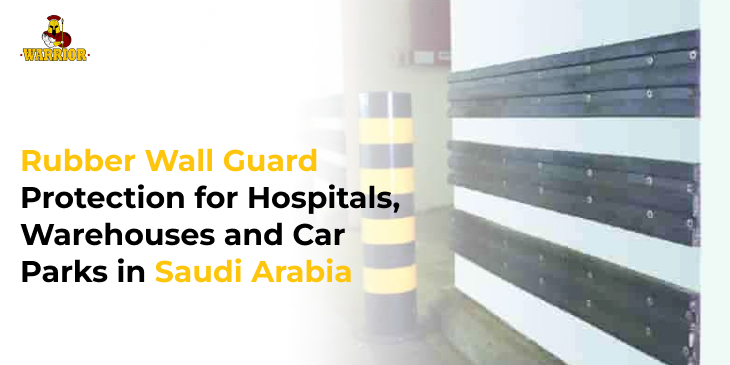
Busy buildings take a beating. In hospitals, warehouses, and car parks across Saudi Arabia, walls meet gurneys, forklifts, trolleys, and car bumpers all day long. Every bump leaves a mark, and those marks add up fast. What starts as a scuff turns into patching, repainting, and time lost to repairs.
A rubber wall guard gives those surfaces a tough, flexible shield that soaks up the hit before it ever reaches the wall behind it.
For facility managers and contractors working in the Kingdom, the stakes go past a few scuffs. Heat, dust, and salty coastal air all shorten the life of building surfaces, so the protection you choose has to be built for the conditions.
Suppliers like Warrior WPS pair wall protection with matching corner guards and speed bumps, giving planners a single source for the high-traffic zones that get hit the hardest.
The best wall protection is the kind nobody notices, right up until you see what an unprotected wall looks like after a year of traffic.
Key Takeaways
A rubber wall guard is a flexible barrier fixed to walls, corners, and columns to absorb impact and stop damage. In Saudi hospitals, warehouses, and car parks, it protects surfaces from beds, forklifts, and car bumpers while standing up to heat, dust, and coastal salt air. Picking the right profile and material keeps repair costs and downtime low over the life of the building.
| Facility Type | Main Threats to Walls | Common Guard Choice |
| Hospitals | Beds, gurneys, wheelchairs, trolleys | Crash rails, corner guards, hygienic wall sheet |
| Warehouses | Forklifts, pallet jacks, carts | Heavy-duty bumper rails, corner and column guards |
| Car parks | Car doors, bumpers, side mirrors | Column guards, D-profile wall guards |
| Service areas | Delivery carts, cleaning equipment | Base guards, skirting, corner guards |
Warrior WPS supplies wall and corner protection built for the demands of Gulf facilities, from quiet hospital corridors to noisy loading bays.
What Is a Rubber Wall Guard?
A rubber wall guard is a protective strip or block fixed to walls, corners, and columns to stop damage from bumps and knocks. Think of it as a bumper for your building. When a trolley, forklift, or car door swings into the wall, the guard takes the blow instead of the paint and plaster.
Most guards called “rubber” are made from tough synthetic compounds. Common materials include EPDM rubber, natural rubber, styrene-butadiene rubber (SBR), neoprene, and recycled rubber blends. These materials share one useful trait: they flex under pressure and then spring back into shape. That flex is what lets them absorb a hit without cracking.
Guards come in a few common shapes:
- D-profile guards have a rounded, half-moon face. The curve spreads the force of an impact and works well on flat runs of wall.
- Flat guards and sheets cover a wider surface area and suit spots where lots of the wall is at risk.
- Corner profiles wrap around outside corners, the part of any wall that gets clipped most often.
Rubber guards lean toward the practical end of the market. They are usually black, hard-wearing, and built for spots where toughness matters more than looks. Service corridors, loading bays, plant rooms, and parking levels are their natural home.
Many rubber wall guards are made from EPDM, a synthetic rubber widely known for holding up well against sunlight, heat, and weather, which is part of why it shows up in everything from roofing to car seals.
Why Wall Damage Adds Up in Busy Saudi Facilities
A single scratch is easy to shrug off. The problem is that busy buildings never stop moving, and the small hits pile up. Left unprotected, a wall in a high-traffic zone can look tired within months.
Here is where the real cost hides:
- Repainting and patching. Damaged plaster and chipped paint mean repeat call-outs for maintenance crews. Each visit costs labour, materials, and time.
- Downtime. A hospital corridor or a warehouse aisle that has to close for repairs slows the whole operation.
- Hygiene risks. In healthcare spaces, cracked walls and exposed plaster can trap dirt and make cleaning harder.
- A worn-out look. Scuffed, dented walls give visitors and clients a poor first impression of a business.
Saudi conditions add another layer. High summer heat, strong sunlight, fine desert dust, and, in coastal cities, salty air all work against building surfaces. Steel and other metals lose strength at high temperatures, and salty air in Dammam and other coastal cities raises the risk of corrosion and oxidation. A wall finish that already takes daily knocks has a hard enough job without the climate wearing it down too.
Guarding the walls up front is far cheaper than fixing them again and again. A good guard turns a repeated repair bill into a one-time fit-out cost.
How Rubber Wall Guards Absorb Impact
The magic is in the flex. Rigid materials like bare concrete or painted plaster have no give. When something hits them hard, the energy has nowhere to go, so the surface cracks, dents, or chips.
Rubber behaves differently. When a forklift or gurney strikes a rubber guard, the material squashes for a split second and spreads the force across a wider area. Then it bounces back to its original shape. Most of the impact energy gets soaked up by the guard instead of passing into the wall.
This gives you a double benefit:
- The wall stays intact because the guard takes the hit.
- The moving object takes less damage too, since it strikes a soft, forgiving surface instead of hard concrete.
That second point matters more than people expect. A forklift that clips a rubber bumper rail comes away with barely a scratch. The same forklift hitting bare concrete can chip its own frame or crack a load. Protecting the wall and protecting the equipment go hand in hand.
Types of Rubber Wall Guard Systems and Where They Fit
There is no single guard that suits every wall. The right choice depends on what is hitting the wall, how hard, and how often. Here are the main types of rubber wall guard systems and the jobs they do best.
- D-profile bumper guards. Rounded strips that run along walls at bumper or handrail height. Great for corridors, service areas, and any wall clipped by carts and trolleys.
- Flat wall guards and sheets. Wider, flatter protection for spots where a big area of wall is exposed to knocks and rubbing.
- Corner guards. Fitted to outside corners, the single most vulnerable point on any wall. Carts, beds, and forklifts clip corners more than any flat surface.
- Crash rails and guard rails. Sturdier horizontal rails, often mounted at cart or bed height, are built to take repeated heavier impacts along a run of wall.
- Column and bollard guards. Wrap-around protection for round or square columns. These are a must in parking structures and warehouses where columns sit close to moving traffic.
- Base guards and skirting. Low-level protection along the bottom of walls, where pallet jacks, cleaning machines, and cart wheels do their damage.
- Door and frame guards. Protection for door edges and frames, which take a beating from beds, luggage trolleys, and equipment moving in and out of rooms.
- Handrail-integrated guards. Rails that offer both a handhold and wall protection in one fitting are handy in healthcare and public buildings.
You will often see several of these used together. A hospital corridor might pair a crash rail at bed height with corner guards on every turn and base guards along the floor line. Warehouses frequently mix heavy-duty bumper rails, corner guards, and column protection.
For a combined approach, many buyers source their corner and wall guards from one supplier so the profiles and finishes match across the whole site.
For sites that also need traffic control, Warrior WPS offers speed bumps and wheel stoppers alongside wall protection, so car parks and yards can be kitted out in one order.
Rubber Wall Guards in Hospitals and Healthcare Facilities
Hospitals are hard on walls. Beds, wheelchairs, gurneys, IV stands, meal trolleys, and cleaning carts move through corridors around the clock. Corners and mid-wall zones take constant knocks, and the traffic never really stops.
A hospital wall guard has to clear a higher bar than one in a warehouse. On top of taking impact, it needs to help keep the space clean and safe. That means smooth, wipe-clean surfaces with few seams where dirt could gather. In a place where infection control is a daily priority, walls that clean easily are part of the safety picture.
Here is what healthcare buyers usually look for:
- Impact protection at bed and cart height, where most collisions happen.
- Corner guards on every turn, since gurneys clip corners at speed.
- Hygienic, easy-clean surfaces that stand up to strong cleaning agents.
- Handrail-and-guard combinations that support patients while shielding the wall.
The payoff is real. Well-protected corridors stay looking clean and cared for, cut down on repeated maintenance, and keep walls in a state that is easier to keep hygienic. In a hospital, a scuffed wall is not only unsightly. It can become a spot that is harder to keep clean, which is why healthcare planners treat wall protection as part of the build, not an afterthought.
Wall Protection in Warehouses and Distribution Centers
Warehouses live and die by movement. Forklifts, pallet jacks, reach trucks, and hand carts run all day, often in tight aisles and around blind corners. When a loaded forklift misjudges a turn, the wall or column pays for it.
The impacts here are heavier than in most buildings, so the protection has to match. Warehouse guards tend to be thicker, tougher, and mounted to survive real force.
Key zones to protect in a warehouse include:
- Aisle ends and corners, where forklifts turn and swing wide.
- Loading docks, which see constant traffic from trucks, carts, and equipment.
- Columns near traffic lanes, which act like magnets for forklift forks and pallet edges.
- Low walls and partition bases, where pallet jacks and wheels rub and scrape.
Downtime is the enemy in any distribution operation. A damaged column or a cracked dock wall can slow throughput and, in the worst case, raise safety concerns. Heavy-duty rubber guards keep the structure intact and let the operation keep moving. They also protect the forklifts themselves, cutting repair bills on both the building and the fleet.
Car Park and Parking Structure Wall Protection
Car parks pack a lot of tight turns, low walls, and columns into a small footprint. Add drivers squeezing into narrow bays, and the result is a steady stream of clipped mirrors, scraped bumpers, and scuffed walls.
Rubber guards do two jobs in a parking structure. They protect the building and the vehicles. A rubber-lined column is far kinder to a car door than bare concrete.
Common parking protection includes:
- Column guards wrapped around structural pillars, the most-hit target in any car park.
- D-profile wall guards at bumper height along low walls and ramps.
- Corner protection at the sharp turns near entries, exits, and ramps.
Visibility helps too. Many parking guards come in bright colours or carry reflective strips so drivers can see the edges clearly, especially on dim lower levels. A brightly marked, well-cushioned column guides drivers and softens the blow if contact happens anyway. In a busy Saudi shopping mall or office tower, that mix of protection and guidance keeps both the structure and the customers’ cars in better shape.
Choosing a Rubber Wall Protector for Saudi Conditions
Picking wall protection in the Kingdom means thinking past impact alone. The climate has a real say in how long any surface lasts. A good rubber wall protector has to handle heat, sun, dust, and, near the coast, salt air, all without going brittle or losing its grip on the wall.
Here is what to weigh up:
- Heat and UV. Saudi summers are intense. Long-term contact with ultraviolet rays can break materials down, causing discolouration, brittleness, and structural weakening. Look for guards made from UV-stable compounds like EPDM, which is widely valued for standing up to sun and heat.
- Dust and abrasion. Dust and sand work like an abrasive, and when combined with vibration, they can wear through coatings and surfaces over time. Smooth, dense rubber shrugs off grit better than softer or textured finishes.
- Coastal salt. In Jeddah, Dammam, Al Khobar, and Jubail, salty air is a constant. Salt-laden air, high humidity, and saline groundwater all accelerate metal corrosion in Saudi coastal cities. Rubber itself does not rust, which is a real advantage, but any metal fixings and brackets need to be corrosion-resistant to match.
That last point matters most for the fasteners. The debate over how metals like nylon and stainless steel hold up against corrosion and hygiene in coastal cities is a useful guide when choosing brackets and mounting hardware for guards near the sea.
Fun fact: Rubber is one building material that is said to shrug off salt air with ease, since it has no metal to rust. The trick in coastal projects is usually the fixings, not the guard itself.
The takeaway is simple. Choose a rubber compound rated for heat and UV, keep the surface dense and smooth to fight dust, and match the guard with fixings that can handle salt if the site sits near the coast.
What Affects the Cost of a Wall Protection Guard
Budgets matter on every project, and wall protection is no exception. The price of a wall protection guard depends on a handful of factors, and knowing them helps you plan and compare quotes fairly.
The main cost drivers are:
- Material. Different rubber compounds and grades carry different price tags. Heavy-duty and UV-stable options usually cost more up front but last longer.
- Profile and thickness. A thick, heavy-duty crash rail costs more than a slim base guard. Bigger impacts need beefier profiles.
- Coverage. The total length of wall, number of corners, and number of columns all add up. Larger sites need more material.
- Custom colours or reflective strips. Standard black is usually the most economical. Bright colours and reflective finishes can add cost.
- Installation. Labour, fixings, and site access all factor in. Tricky spots like curved columns take longer to fit.
It helps to think in terms of lifetime value rather than the sticker price alone. A cheap guard that goes brittle in the sun or peels off the wall costs more in the long run through replacements and repeat repairs. A well-chosen guard that lasts years is the better buy. The same logic applies to related finishes, which is why comparing cost-effective skirting materials for large commercial projects is worth doing before you commit to a full fit-out.
Ready to protect your walls the right way? Warrior WPS can help you spec the correct guards for your hospital, warehouse, or car park and quote the full job.
Installation and Maintenance That Lasts
Even the best guard only performs if it is fitted well and looked after. Good installation is what keeps a guard on the wall through years of daily hits.
A few pointers for a solid fit:
- Fix to solid backing. Guards should be mounted to sound, stable wall material so the fixings hold under repeated impact.
- Use the right fasteners. Match the fixings to both the load and the environment. Near the coast, corrosion-resistant hardware is a must.
- Mind the height. Set rails and rubber wall guards at the height where impacts actually happen, usually at bumper, cart, or bed level.
- Wrap corners properly. Corners take the most abuse, so make sure corner profiles are secure and fully cover the edge.
Maintenance is refreshingly light. Rubber guards are easy to clean with normal cleaning routines, which is one reason they suit hospitals and food-handling areas. A quick check every so often for loose fixings or heavy wear is usually all it takes. In dusty inland sites, a regular wipe-down keeps grit from building up. In coastal sites, an occasional look at the fixings helps catch any early signs of corrosion before they become a problem.
Standards, Hygiene, and Compliance Notes
Wall protection often has to fit into a wider set of building requirements, especially in healthcare and public spaces. While the exact rules depend on the project and local authority, a few themes come up again and again.
- Fire performance. Some settings call for materials that meet fire-safety ratings. Always confirm the fire rating of a guard against the requirements for the space.
- Hygiene. Healthcare and food areas favour smooth, non-porous, wipe-clean surfaces that support cleaning and infection-control routines.
- Accessibility. Handrails and guards in public buildings may need to sit at set heights and offer a safe grip for people with limited mobility.
- Durability standards. Heavy-use zones like warehouses and car parks benefit from guards rated for the impacts they will face.
The safest move is to confirm the specific requirements with the project designer, the facility’s own standards, and the relevant Saudi authority before ordering. A guard that ticks the impact box but misses a fire or hygiene requirement can cause headaches later. Getting the spec right early keeps the whole job smooth.
Conclusion
Walls in busy buildings work hard, and in Saudi hospitals, warehouses, and car parks they work harder than most. Beds, forklifts, and car bumpers keep coming, and the climate piles on heat, dust, and salt.
A well-chosen rubber wall guard answers all of it. It absorbs the daily knocks, protects both the wall and whatever hits it, and holds up to Gulf conditions when the right material and fixings are used.
The smart play is to match the guard to the job. Pick the profile that suits the traffic, choose a rubber rated for heat and sun, and mind the fixings near the coast. Do that, and you turn a repeat repair bill into a quiet, one-time investment that keeps your building looking sharp for years.
When you are ready to protect your facility the right way, Warrior WPS can spec, supply, and support wall protection built for the Kingdom’s toughest spaces.
Frequently Asked Questions
Are rubber wall guards fire-rated?
Some rubber wall guards are made to meet fire-safety ratings, but not all are, so the rating varies by product. Always confirm the fire performance of a specific guard against the requirements for your space before ordering.
Can rubber wall guards be installed on curved walls or columns?
Yes. Flexible rubber profiles and wrap-around column guards are designed to hug round columns and curved surfaces, which is why they are common in car parks and warehouses.
How long do rubber wall guards typically last?
With good installation and light maintenance, quality rubber guards can last for many years, even in high-traffic zones. Lifespan depends on the material grade, the level of impact, and how well the guard is matched to the climate.
Do rubber wall guards come in colours other than black?
Black is the most common, and usually the most economical option, but many guards are available in other colours or with reflective strips. Bright finishes are popular in car parks and low-light areas to boost visibility.
Can rubber wall guards be used outdoors in car parks and loading yards?
Yes, rubber guards are well suited to outdoor use, including loading docks, ramps, and open parking areas. For Saudi sites, choose a UV-stable rubber and pair it with corrosion-resistant fixings, especially near the coast.