


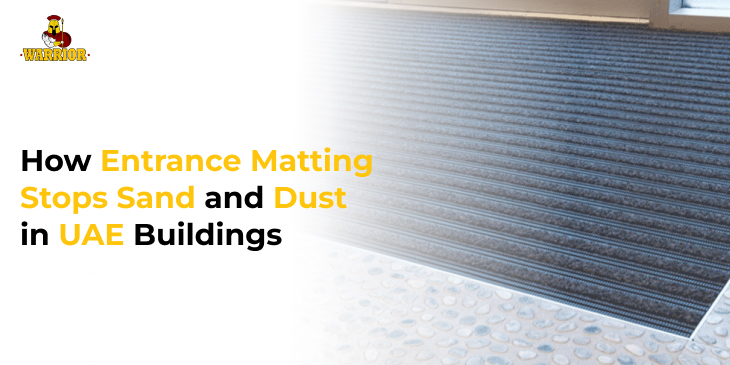
Walk into almost any building in the UAE, and you bring a little of the desert with you. Fine sand clings to shoes. Dust rides in on trouser cuffs and trolley wheels. Within minutes, that grit is on the lobby floor, in the lifts, and working its way across the whole building.
A good entrance matting system is the quiet workhorse that stops most of it at the door. It scrapes, traps, and holds sand and moisture before they reach your clean floors. For facility teams across Dubai, Abu Dhabi, and Sharjah, the right entrance mat system does more heavy lifting than almost any other piece of floor care.
The strange part is how much a few feet of matting near the threshold can save you deeper inside the building.
Key Takeaways
Entrance matting stops sand and dust by scraping it off shoes and trapping it in the mat, so it never spreads across your floors. In a dusty climate like the UAE, the best results come from placing enough matting at every entrance, choosing tough materials like aluminium, and cleaning the mats often. Done right, it keeps floors cleaner, cuts cleaning costs, and lowers slip risk.
| What matters | Quick answer |
| Main job | Scrape and trap sand, dust, and moisture at the door |
| Best material for dusty climates | Aluminium frames with tough scraper and wiper inserts |
| How much you need | Enough for several full steps, often around 3 to 5 meters |
| Biggest payoff | Cleaner floors, lower cleaning costs, fewer slips |
| Where to place it | Outside, at the threshold, and just inside the door |
Teams that take their entrances seriously tend to build floor and wall protection around one trusted supplier, and in the UAE, Warrior WPS is a familiar name for this kind of workplace protection.
Why Sand and Dust Are Relentless in the UAE
The UAE sits in the middle of a desert, so sand is never far away. It is very fine, it is light, and it travels. Strong seasonal winds like the shamal can lift dust for miles and drop it right at your front door. Add ongoing construction across many cities, and the air near entrances often carries a steady load of grit.
This matters because desert sand is abrasive. It acts like fine sandpaper underfoot. Every step grinds it against your floor finish, dulling shine and wearing down surfaces faster than normal indoor dust would.
High foot traffic makes it worse. Malls, offices, clinics, and warehouses can see thousands of people cross the same threshold each day. Each visitor brings a small deposit, and those deposits add up quickly.
Here is why entrances in the UAE take a harder beating than most:
- Very fine sand slips into tiny gaps and spreads fast.
- Dust events and windy days coat outdoor walkways with fresh grit.
- Heavy foot and trolley traffic drags material across the entry all day.
- Sand plus abrasion shortens the life of expensive floor finishes.
Sand does not only settle on floors. It scrapes along skirting and walls at trolley and pallet height too, which is one reason many UAE facilities pair floor matting with durable wall protection.
Desert sand is much finer than typical garden soil, so it works its way into carpet fibres, floor joints, and lift tracks with very little help. Stopping it at the door is far easier than chasing it later.
How Entrance Matting Traps Sand and Dust at the Door
A quality mat is not a single flat sheet doing one job. It works in stages, each one catching what the last one missed.
Think of it as a short cleaning line for shoes:
- Scrape the coarse grit. An aggressive outer surface knocks loose sand and larger debris off the sole.
- Brush the fine dust. Textured inserts sweep the smaller particles that scraping leaves behind.
- Trap it below the surface. Good mats hold dirt down in their base so foot traffic cannot kick it back up.
- Absorb the moisture. A wiper stage soaks up water from cleaning, rain, or damp shoes, which also lowers slip risk.
This layered approach is why entrance matting placed both outside and just inside a doorway performs so well. The outdoor mat handles the heavy scraping, and the indoor mat catches the fine dust and any leftover moisture.
The payoff is simple. Industry research from the cleaning sector suggests that about 80% of the dirt inside a building is walked in on people’s feet. Catching most of it at the entrance keeps it out of the rest of the building.
Once dirt spreads past the door, it becomes expensive to remove. Cleaning industry estimates put the cost of pulling tracked-in soil back out of a building at hundreds of dollars for every pound of it. Concentrating that soil on a mat is far cheaper than scrubbing it out of an entire floor plan.
Use a two-part setup wherever you can. Place a tough scraper mat outside the door and a wiper mat just inside. The pair captures far more sand than a single mat trying to do both jobs.
Types of Entrance Mats and Where Each Performs Best
Not every mat suits every door. The right choice depends on traffic, climate, and how the space is used.
Aluminium entrance matting is the heavy-duty option. It uses a rigid aluminium frame with replaceable scraper and brush inserts, and it is often recessed into the floor so it sits flush. It handles fine sand, rolling loads, and heavy foot traffic, which makes it a strong fit for busy Gulf lobbies, airports, and malls.
General entrance floor mats cover a wider range. These include scraper mats, wiper mats, and carpet-style mats. They are flexible, affordable, and easy to move, so they suit smaller entrances or areas that need extra coverage during dusty spells.
Commercial entrance mats are built for punishment. They are made to take constant use, resist wear, and keep gripping shoes long after a domestic mat would give out. For warehouses, clinics, and offices with steady traffic, this durability is the whole point.
Here is a quick way to match the mat to the setting:
| Type | Best for | Key strength |
| Aluminium entrance matting | High-traffic lobbies, airports, malls | Long life, flush fit, handles fine sand |
| Entrance floor mats | Smaller doors, flexible coverage | Affordable, easy to place and move |
| Commercial entrance mats | Warehouses, clinics, offices | Tough build for heavy daily use |
In hospitals and clinics, matting choices sit alongside other hygiene-and-safety fittings such as PVC handrails for care settings, since both must survive frequent cleaning.
Aluminium matting is widely known for lasting many years of hard use, which is one reason it shows up in so many of the region’s busiest airports and shopping centres.
7 Things That Make Entrance Matting Work in a UAE Building
The best results come from getting the details right. A mat can look fine and still underperform if it is too short, too smooth, or in the wrong spot. Strong entrance matting in a UAE setting usually gets these seven things right:
- Enough length at every door. Shoes need several full steps on the mat to shed most of their load.
- An aggressive scraping surface. Coarse sand needs a firm, textured top to knock it loose.
- A wiper stage for fine dust and moisture. This catches what scraping misses and dries the sole.
- Tough frames that resist grit. Aluminium frames stand up to sand and rolling trolley loads.
- Slip resistance and a safe edge. A low, secure profile prevents trips at the threshold.
- Easy cleaning and quick drying. Mats that clear out fast keep working through dusty weeks.
- Smart placement, outside and inside. Zones share the work so no single mat is overwhelmed.
Well-chosen commercial entrance mats tick most of these boxes by design, but placement and upkeep still decide how well they do the job.
A mat that is too small is one of the most common mistakes. If shoes clear the mat in a step or two, most of the sand rides straight past it and onto your floor. Size the matting to the traffic, not to the smallest space you can fit it in.
How Much Entrance Matting Does a Building Entrance Need?
The honest answer is: more than most people expect. A single small mat rarely captures enough, because a shoe only sheds a fraction of its grit with each contact.
A useful rule is to allow enough length for several full strides, so each foot lands on the mat more than once. Many facility guidelines point to a few meters of matting at a main entrance, often in the range of three to five meters, with busier or dustier doors needing more.
Coverage climbs with length. Industry studies broadly show that longer matting runs capture a larger share of tracked-in soil, while short mats let a lot of it slip through. In a sandy climate, leaning toward more matting almost always pays off.
A practical way to size entrance matting for a UAE building:
- Measure the traffic. Busier doors need longer runs.
- Account for the weather. Add length for entrances exposed to open, dusty air.
- Use zones. Combine an outdoor scraper, a threshold mat, and an indoor wiper.
- Match the width to the doorway. People should not step around the mat.
In a dusty climate, cleaning schedule matters as much as size. A well-sized mat that is never vacuumed or washed fills up and starts pushing dirt back out. Plan regular cleaning so the matting keeps room to catch more.
Conclusion
Sand and dust are simply part of life in the Emirates, but they do not have to be part of your floors. A properly sized, well-placed entrance matting system quietly stops most of the grit at the door, protects your finishes, and keeps entrances safer for everyone who walks in. It is one of the smallest investments in a building that returns some of the biggest daily savings.
When you are ready to keep the desert outside where it belongs, the workplace protection specialists at Warrior WPS can help you match the right matting to your entrances, so Warrior WPS keeps your floors cleaner from the very first step.
Frequently Asked Questions
What material is best for an entrance mat?
For dusty, high-traffic UAE settings, aluminium-framed matting with replaceable scraper and brush inserts is hard to beat, since it stands up to fine sand and rolling loads. For lighter or budget-friendly needs, rubber-backed textile and PVC mats also work well.
What is the best type of entrance mat?
The best type is usually a combined scraper-and-wiper setup rather than a single mat, because one surface scrapes coarse sand while the other lifts fine dust and moisture. A three-zone layout with outdoor, threshold, and indoor mats gives the strongest results.
How often should entrance mats be cleaned in a dusty climate?
In the UAE, high-traffic mats often need vacuuming daily and a deeper wash weekly, though very busy or exposed entrances may need more. A mat that stays full of sand cannot trap any more, so regular cleaning keeps it effective.
Can entrance matting be recessed into the floor?
Yes. Recessed aluminium matting sits flush inside a floor well at the entrance, which gives a clean look, a safe edge, and room for longer runs. It is a common choice for lobbies where appearance and durability both matter.
Does entrance matting reduce slips near doorways?
Yes. By capturing water and moisture along with sand, matting keeps thresholds drier and adds a slip-resistant surface right where people change pace, which is a frequent spot for slip and fall incidents.