


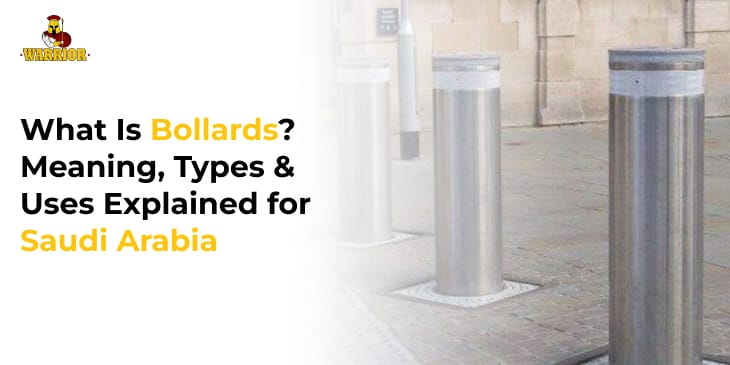
You see them outside shopping malls in Riyadh. They stand guard at government buildings in Jeddah. They line parking lots across the Kingdom. These short, sturdy posts are everywhere, doing important work to keep people and buildings safe. But many people don’t know what they’re called or why they matter so much.
What are bollards? These simple posts have become key players in Saudi Arabia’s push for safer, smarter cities under Vision 2030. Understanding bollards helps you make better choices for your building, business, or project.
Key Takeaways
What are bollards? Bollards are short, strong posts that stop vehicles from entering certain areas and protect people and buildings from car crashes. They come in many types, from simple decorative posts to high-security barriers that can stop trucks. In Saudi Arabia, bollards protect everything from oil facilities to shopping centers, and they must meet HCIS safety standards for critical sites.
| Key Detail | What You Need to Know |
| Main Purpose | Stop vehicles, protect pedestrians, control traffic |
| Common Materials | Steel, stainless steel, concrete, plastic |
| Types | Fixed, removable, retractable, flexible, crash-rated |
| Saudi Requirements | HCIS approval for industrial and critical sites |
| Typical Locations | Malls, government buildings, oil facilities, parking lots |
| Price Range | SAR 500–50,000+ depending on type and security level |
Need HCIS-compliant bollards for your facility? Warrior WPS offers certified security solutions built for Saudi Arabia’s unique needs.
From Ships to Streets: The Simple Story of Bollards
The story of bollards starts at sea. Sailors needed something strong to tie their ships to the dock. They took old cannons that couldn’t fire anymore and buried them upside down in the ground. The heavy iron made perfect posts that could hold even the biggest ships in place.
The word “bollard” comes from an old English word meaning tree trunk. This makes sense when you think about it. Both tree trunks and bollards are thick, sturdy posts that don’t move. The first written use of the word appeared in the 1700s.
These ship posts worked so well that cities started using them on land. Amsterdam led the way in the early 1800s. Back then, streets had no curbs. Shop owners needed something to protect their stores from horse-drawn carriages that might crash into the buildings. They copied the bollard design from the harbor and put them on the streets.
The idea spread across Europe and then around the world. Today’s bollards look different from old cannons, but they do the same job. They create a barrier between vehicles and the things we want to protect.
Bollards meaning has grown over time. Now they protect people, buildings, and equipment from modern cars and trucks instead of runaway carriages.
Why Saudi Arabia Uses More Bollards Than Ever Before
Saudi Arabia is building faster than almost any country in the world. Vision 2030 brings mega-projects like NEOM, The Line, and new industrial cities. Each project needs smart safety solutions to protect people and property.
The Kingdom faces unique security needs:
- Oil and gas facilities need the strongest protection. These sites are critical to the economy and must meet strict HCIS standards.
- Government buildings require barriers against vehicle attacks. Security has become more important as the country grows.
- Shopping malls and public spaces welcome millions of visitors. Bollards keep cars separate from walking areas.
- Construction zones protect workers from traffic on busy roads. The Kingdom has thousands of active building sites.
Vision 2030 also focuses on pedestrian-friendly design. NEOM and The Line are being built with people first, not cars. Bollards help create these car-free zones while keeping emergency vehicles able to access when needed.
The High Commission for Industrial Security (HCIS) sets strict rules for critical facilities. Any site handling petroleum, chemicals, or power must use approved HVM crash rated bollards and barrier systems. These standards make Saudi Arabia one of the most regulated markets for security products.
Looking for HCIS-certified protection? Warrior WPS provides tested and approved bollards that meet all Kingdom requirements.
Climate matters too. Saudi Arabia’s heat, sun, and coastal salt air demand tough materials. Stainless steel bollards and specially coated barriers last longer in these conditions than basic posts.
The Three Jobs Every Bollard Does
Every bollard serves at least one of three main purposes. Understanding these jobs helps you pick the right type for your needs.
Job One: Stop Vehicles
Bollards create a physical wall that cars and trucks cannot pass. The strength depends on the type:
- Decorative bollards slow down drivers and make them more careful
- Security bollards stop regular cars from entering
- Crash-rated bollards can halt a speeding truck
Job Two: Protect People
Pedestrian safety is the top priority in busy areas. Bollards work as shields between walking zones and driving zones. They let people move freely while keeping vehicles at a safe distance.
Shopping centers use bollards at entrances where crowds gather. Schools put them near pickup areas. Mosques install them to protect worshippers during prayer times.
Job Three: Guide Traffic
Bollards show drivers where to go. Bright colored posts mark lanes on highways. Posts in parking lots direct cars to empty spaces. Removable bollards control access to delivery areas.
Many modern bollards do all three jobs at once. A crash-rated post at a government building stops attacks, protects visitors, and guides authorized vehicles to the right entrance. Understanding types of bollards helps match the right solution to each specific need.
The best installations combine bollards with other safety features. Cameras, lighting, and guards work together with physical barriers to create complete protection.
Different Types of Bollards and Where You’ll Find Them in the Kingdom
What bollards are comes down to understanding the different varieties available. Each type serves specific needs and locations across Saudi Arabia.
Fixed Bollards: Posts That Never Move
Fixed bollards are permanent installations set in concrete. They’re the strongest option for long-term protection.
Common materials:
- Steel filled with concrete for maximum strength
- Stainless steel bollards for coastal areas like Jeddah and Dammam
- Cast iron for decorative applications
- Reinforced concrete for industrial sites
Where you’ll see them:
- Outside Aramco facilities and refineries
- Protecting ATMs and bank entrances
- Around utility boxes and fire hydrants
- At building corners in parking garages
Fixed bollards work best when you know the barrier will stay forever. They take more work to install but provide the most reliable protection.
Removable Bollards: Easy Access When You Need It
Removable bollards pull out of the ground using a key or special tool. A receiver sleeve stays in the ground, and the post slides in and out.
Perfect for:
- Delivery zones that need access during certain hours
- Event spaces that change between pedestrian and vehicle use
- Emergency access routes that stay clear most of the time
- Seasonal closures in parks or beaches
Many facilities in Riyadh and other major cities use removable posts for flexible security. They lock in place when up and store easily when removed.
Automatic and Retractable Bollards: Smart Technology
These bollards rise and fall with the push of a button or automatically using sensors. They’re powered by hydraulic or electric systems.
Key features:
- Remote control operation from security offices
- Integration with access cards and cameras
- Fast response for emergency situations
- Programmable schedules for different times of day
Common locations:
- Ministry buildings and government complexes
- Military installations
- Corporate headquarters with high security needs
- NEOM and smart city projects
The technology costs more upfront but saves on labor. Guards don’t need to manually remove and replace posts throughout the day.
Flexible Bollards: Guidance Without Blocking
Flexible posts bend when hit and pop back up. They’re made from high-density plastic in bright colors like yellow, orange, or red.
Best uses:
- Highway lane markers
- Construction zone guides
- Parking lot traffic flow
- Low-speed areas where gentle redirection is enough
These MS bollards and barriers (mild steel base with plastic cover) cost less and install faster than security-rated options. They prevent accidents through visibility rather than physical strength.
Crash-Rated Security Bollards: Maximum Protection
The strongest bollards undergo special testing to prove they can stop vehicles at specific speeds. ASTM F2656 standards rate them by vehicle weight and speed.
Rating levels common in Saudi Arabia:
- M30: Stops a 6,800 kg truck at 30 mph
- M40: Stops a 6,800 kg truck at 40 mph
- M50: Stops a 6,800 kg truck at 50 mph
Required at:
- All HCIS-regulated facilities (oil, gas, petrochemicals)
- Power plants and water treatment facilities
- Critical infrastructure sites
- High-risk government buildings
These bollards need engineered foundations going several feet deep. Professional installation is not optional—it’s required for certification.
Choosing the Right Bollard for Your Needs
The right choice depends on four main factors. Think through each one before making a decision.
Security Level Required
Start by asking what you’re protecting and from what threat:
- Low risk: Decorative or flexible bollards for traffic guidance
- Medium risk: Fixed steel bollards rated for regular vehicle impact
- High risk: HCIS-certified crash-rated systems tested against trucks
Oil and gas facilities must use the highest rated products. Shopping centers might need medium protection at entrances but low-level guidance in parking areas.
Permanent or Temporary Installation
Consider how long the bollards will stay in place:
- Construction sites need portable options that move between projects
- Building entrances require permanent fixed installations
- Event venues benefit from removable or retractable systems
- Seasonal locations work well with bollards that adapt
Surface-mounted bollards install faster but offer less strength than in-ground options. Choose based on your timeline and security needs.
Budget Considerations
Typical price ranges in Saudi Arabia:
| Bollard Type | Approximate Cost (SAR) |
| Flexible/Decorative | 500–2,000 per post |
| Fixed Steel | 2,000–8,000 per post |
| Removable | 3,000–10,000 per post |
| Automatic/Retractable | 15,000–50,000+ per post |
| Crash-Rated | 8,000–30,000 per post |
Installation adds 30-50% to material costs. Complex foundations or multiple bollards reduce the per-unit price.
Climate and Environment
Saudi weather demands specific features:
- Hot dip galvanized coating prevents rust in coastal humidity
- UV-resistant finishes stop sun damage and fading
- Sand-resistant mechanisms for moving parts
- Heat-tolerant hydraulics for automatic systems
Wall protection and safety products that work in Europe might fail in Riyadh’s summer heat. Always verify products are tested for Gulf conditions.
Ready to protect your facility with the right bollards? Warrior WPS offers expert consultation to match your exact security and budget needs.
Working with Certified Suppliers
For HCIS-regulated sites, only approved suppliers and installers can provide compliant systems. Check that your vendor:
- Has current HCIS approval documentation
- Provides certified test reports for crash ratings
- Employs licensed engineers for foundation design
- Offers warranty and maintenance support
Local manufacturers understand Saudi regulations better than international-only companies. Many global brands now have Kingdom-certified production facilities.
The supplier should explain spacing requirements too. Security bollards typically install 1-1.2 meters apart to prevent vehicles from squeezing through gaps.
Conclusion
Bollards do important work across Saudi Arabia every day. These sturdy posts protect people at shopping centers, secure critical oil infrastructure, and guide traffic through busy streets.
From simple decorative posts to high-tech crash-rated systems, bollards come down to choosing the right tool for each job. The Kingdom’s rapid growth under Vision 2030 means more buildings, more public spaces, and more need for smart safety solutions.
HCIS standards keep critical facilities protected while new mega-projects like NEOM push bollard technology forward with smart features and pedestrian-first design. Understanding bollard types and uses helps you make decisions that keep people safe and meet regulatory requirements.
Protect what matters most with Warrior WPS—your trusted partner for HCIS-certified bollards and barriers built tough for Saudi conditions. Contact us today for expert guidance on securing your facility the right way.
Frequently Asked Questions
Can bollards be painted to match building colors?
Yes, most steel and stainless steel bollards accept powder coating in custom colors. This lets you match your facility’s design while maintaining security standards.
How deep do crash-rated bollards need to be buried?
Crash-rated bollards typically require foundations 3-4 feet deep, with reinforced concrete cages. The exact depth depends on soil conditions and the specific rating required.
Do automatic bollards work during power outages?
Quality automatic bollards include battery backup systems that operate for 24-48 hours without external power. Some models also have manual override options.
How long do bollards last in Saudi weather?
Properly coated steel bollards last 15-25 years in Saudi conditions. Stainless steel and galvanized options with good maintenance can exceed 30 years even in coastal areas.
Are there bollards that vehicles can drive over when needed?
Yes, fold-down or collapsible bollards lay flat to the ground when unlocked. They’re perfect for occasional delivery access while maintaining security most of the time.