


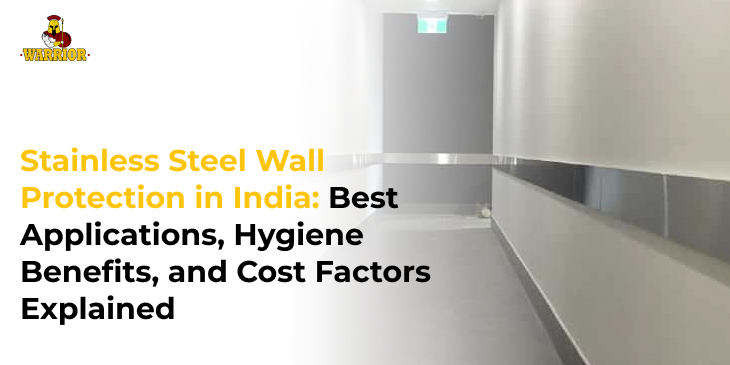
Walls take a beating every single day. Carts bump into them. Trolleys scrape past. Hands push the same doors open in the same spots a thousand times over. Over the months, even a freshly painted wall starts to look tired, chipped, and stained. In busy Indian buildings like hospitals, hotels, and kitchens, that wear shows up fast.
Stainless steel wall protection is one of the smartest ways to keep walls clean, strong, and looking new for years. It shields high-traffic surfaces from dents, scratches, and germs while adding a sleek, modern finish.
From steel corner guards and handrails to full wall cladding, these systems do quiet, heavy-duty work in the background.
So why are so many builders, hospital planners, and restaurant owners across India choosing steel for their walls? The answer has a lot to do with what happens after the walls get dirty.
Key Takeaways
Stainless steel wall protection is a system of metal guards, rails, and panels that shields walls from damage and keeps them easy to clean. It is popular across India for hospitals, kitchens, hotels, and other busy places because it resists rust, germs, and daily wear far better than paint or plastic. The most common types include corner guards, wall guards, handrails, and kick plates. The cost depends mostly on the steel grade, the thickness of the metal, the finish, and how much wall area needs to be covered.
| Topic | Quick Answer |
| What it is | Metal guards, rails, and panels that protect walls and stay hygienic |
| Best for | Hospitals, kitchens, hotels, labs, malls, schools, and factories |
| Main types | Corner guards, wall guards, handrails, kick plates, cladding sheets |
| Biggest benefit | Hygiene plus long-term durability in high-traffic areas |
| Cost drivers | Steel grade, thickness, finish, coverage area, and installation |
| Common grades | 304 for general use, 316 for harsher or wetter settings |
| Lifespan | Often lasts for many years with very simple cleaning |
WarriorWPS designs stainless steel wall protection systems built for India’s busiest spaces, where clean walls and tough surfaces matter most.
What Stainless Steel Wall Protection Actually Means
Stainless steel wall protection is a group of metal products fitted onto walls and corners to stop damage. Think of it as armor for your building. Instead of letting carts, luggage, wheelchairs, and foot traffic chip away at your paint and plaster, you give those surfaces a tough metal shield.
These products are usually made from sheets of stainless steel that get cut, bent, and finished into useful shapes. Some wrap around corners. Some run flat along walls at cart height. Others sit near the floor where shoes and wheels scuff the most.
The steel itself is special. Stainless steel contains chromium, which forms a thin, invisible layer on the surface. This layer protects the metal from rust and stains, and it heals itself when scratched. That is the same quality that makes stainless steel a favorite for kitchen sinks and surgical tools.
So when you put that material on a wall, you get a surface that fights damage, resists rust, and wipes clean in seconds. It is a simple idea with a big payoff.
The “stainless” in stainless steel comes from that self-healing chromium layer, which is why a small scratch usually does not lead to rust the way it would on plain steel.
Common Types of Stainless Steel Wall Guards and Fittings
Stainless steel wall protection is not a single product. It is a family of pieces, and each one solves a different problem. Most buildings use a mix of them. Here are the main types you will come across in India.
- Corner guards. These wrap around the vertical edges of walls, which are the spots that get hit the most. They come in different angles and heights. In many product catalogs these are listed as ss corner guards, and they are often the first thing planners add because corners take the worst abuse.
- Wall guards and crash rails. These run flat along the wall at the height where carts and trolleys make contact. They absorb impact and spread it out so the wall behind stays safe.
- Handrails. These give people something to hold while also protecting the wall. They are common in hospital corridors, ramps, and stairwells.
- Kick plates. Fitted at the bottom of doors and walls, kick plates take the hits from feet, mops, brooms, and cleaning equipment.
- Wall cladding sheets. These are large flat panels that cover big stretches of wall completely. They are popular behind cooking ranges, sinks, and prep stations.
- Splashbacks. These protect the wall behind areas that get wet or greasy, like kitchen counters and wash basins.
- Bumper rails. Heavier and thicker than standard crash rails, these are used where impacts are strong and frequent, such as loading areas and busy service corridors.
Many Indian buildings combine several of these. A hospital corridor might use stainless steel wall guards at cart height, corner guards on every turn, handrails along the walls, and kick plates near the floor. Together they cover every angle of attack.
If you want a closer look at a full set of pieces, a single supplier line of corner guards, wall guards, and handrails can cover most of these needs in one matched finish.
Best Applications of Stainless Steel Wall Protection Across Indian Spaces
Stainless steel wall protection earns its place wherever walls face heavy use and strict cleaning.
Across India, the same products show up again and again in the spaces that simply cannot afford damaged or dirty walls. Here are the settings where it makes the biggest difference.
1. Hospitals and Clinics
Hospitals are the classic home for steel wall protection. Beds, stretchers, wheelchairs, and supply carts move through corridors all day and night. Walls get scraped constantly. On top of that, infection control rules are strict, so surfaces must be cleaned often with strong chemicals.
Stainless steel handles both jobs. It shrugs off the bumps and stands up to harsh disinfectants without fading or cracking. For a deeper look at this setting, the reasons behind choosing guards in healthcare facilities line up almost perfectly with what hospital planners look for.
WarriorWPS offers hospital-grade stainless steel wall guards and corner protection made to handle constant cart traffic and strict cleaning routines.
2. Commercial Kitchens and Restaurants
Busy kitchens are hot, greasy, wet, and crowded. Walls behind cooking ranges and sinks face splashes, steam, and grease all day. Plain paint or tile grout soaks up grime and grows stains fast.
Steel cladding and splashbacks wipe clean with a single pass. They do not absorb oil or odor, and they meet the hygiene standards that food businesses care about. That is why so many restaurant kitchens across India line their walls with steel.
3. Hotels and Hospitality
In hotels, looks matter as much as function. Lobbies, service corridors, and back-of-house areas see heavy luggage carts and constant staff movement. Damaged walls send the wrong message to guests.
Stainless steel offers a clean, premium look while quietly protecting the surfaces guests never think about. A brushed finish blends into modern interiors and hides everyday marks well.
4. Food Processing and Packaging Units
Food factories live by hygiene rules. Surfaces must be smooth, non-porous, and easy to sanitize. Stainless steel checks every box, which is why processing lines, packaging halls, and cold storage rooms rely on it heavily.
The metal does not flake or shed particles into the product area, and it survives frequent washdowns with hot water and cleaning agents.
5. Pharmaceutical Plants and Laboratories
Pharma and lab spaces demand even tighter control over contamination. Walls in clean rooms and lab corridors need to stay spotless and chemical-proof.
Steel resists most lab chemicals and cleaning solutions. Its smooth surface leaves nowhere for dust or microbes to settle, which supports the careful environments these facilities require.
6. Schools, Colleges, and Institutions
Educational buildings move thousands of students through narrow corridors every day. Bags, hands, and feet wear down walls quickly. Repainting again and again gets expensive.
Steel kick plates and wall guards cut down on that endless maintenance. They take the daily abuse and keep institutional walls looking presentable for years.
7. Shopping Malls and Retail
Malls deal with constant foot traffic, stroller wheels, cleaning machines, and stocking carts. High-traffic corridors and service areas benefit from corner guards and crash rails that keep walls neat in public view.
A polished steel finish also fits the modern retail look, so protection does not come at the cost of style.
8. Airports, Metros, and Transit Hubs
Transit spaces never sleep. Luggage trolleys, cleaning crews, and huge crowds keep walls under pressure around the clock. Durability and easy cleaning are non-negotiable.
Stainless steel suits these demands well, which is why it appears throughout terminals, stations, and busy public concourses.
9. Factories and Warehouses
Industrial settings face the toughest impacts of all. Forklifts, pallet jacks, and heavy carts can wreck ordinary walls in weeks. Heavy-duty bumper rails and thick steel guards absorb these blows.
In these spaces, wall protection is as much about safety and uptime as it is about appearance.
Hygiene Benefits That Make Stainless Steel a Top Choice
Hygiene is the reason stainless steel wall protection is so common in healthcare and food settings. The material has a set of natural qualities that make cleanliness simple. Here is what gives it the edge.
- Non-porous surface. Steel has no tiny holes or pores for germs, grease, or moisture to hide in. Dirt sits on top instead of soaking in, so it wipes away easily.
- Easy to sanitize. A quick wipe with a cloth and cleaner does the job. There is no grout, texture, or rough patch to trap grime.
- Chemical resistant. Steel stands up to strong disinfectants and cleaning agents that would damage paint, wood, or plastic over time.
- No mold or mildew. Because it does not absorb water, steel does not feed mold growth the way damp plaster or porous tile can.
- Does not off-gas. The material is stable and does not release fumes, which matters in sensitive settings like operating rooms and labs.
- Fire resistant. Steel does not burn, adding a layer of safety in kitchens and industrial spaces.
- Long-lasting cleanliness. Frequent cleaning does not wear the surface down, so it stays smooth and sanitary for years.
Put simply, steel walls stay cleaner with less effort. In places where a single missed germ can cause real harm, that reliability is worth a great deal.
Stainless steel is widely used in surgical instruments and food prep equipment for the very same reason it works on walls, which is that bacteria struggle to cling to its smooth, non-porous surface.
Stainless Steel vs Other Wall Protection Materials
Steel is not the only option for protecting walls. PVC and aluminium are both common too. Each has its place, and the right pick depends on the space, the budget, and the level of hygiene needed. Here is a simple side-by-side view.
| Feature | Stainless Steel | PVC / Plastic | Aluminum |
| Hygiene | Excellent, non-porous | Good, but can scratch and stain | Good, but can corrode in some settings |
| Durability | Very high, resists dents | Moderate, can crack over time | Moderate to high |
| Look | Premium, modern | Functional, many colors | Clean, lightweight |
| Cleaning chemicals | Handles strong agents | Limited tolerance | Moderate tolerance |
| Cost | Higher upfront | Budget-friendly | Mid-range |
| Best for | Hospitals, kitchens, labs | Homes, light commercial | General commercial |
PVC remains a strong choice for budget-friendly and decorative jobs, especially in homes. For example, well-chosen PVC wall panels can add both style and protection to a bedroom without a heavy spend. The trade-off is that plastic does not match steel for hygiene or impact resistance in demanding settings.
A Quick Word on Steel Grades: 304 vs 316
When people talk about stainless steel grades for wall protection, two numbers come up most often.
- Grade 304 is the everyday workhorse. It resists rust well and suits most indoor uses like corridors, kitchens, and lobbies. It is the common choice across many Indian projects.
- Grade 316 adds an element called molybdenum, which boosts resistance to salt, moisture, and aggressive chemicals. It is often picked for coastal areas, heavy washdown zones, and labs where conditions are harsher.
For most buildings, 304 is plenty. Where humidity, salt air, or strong chemicals are a daily reality, 316 is the safer long-term bet.
Cost Factors for Stainless Steel Wall Protection in India
The cost of stainless steel wall protection in India is not a single fixed number. It shifts based on several choices you make for your project. Understanding these factors helps you plan a realistic budget and avoid surprises. Here are the main things that move the price.
- Steel grade. Grade 316 generally costs more than grade 304 because of its added corrosion resistance. Picking the right grade for your setting keeps you from overspending or under-protecting.
- Thickness of the metal. Thicker steel, often described by its gauge, costs more but stands up to heavier impacts. Industrial bumper rails use thicker steel than a hotel corridor guard would need.
- Finish. A brushed or satin finish is common and practical. Mirror finishes and special textures usually add to the price.
- Coverage area. The more wall you protect, the more material and labor the job requires. Full cladding costs far more than a few corner guards.
- Product type. A simple kick plate is cheaper than a custom handrail system with fittings and mounts.
- Fabrication and customization. Standard sizes cost less. Custom shapes, special angles, and bespoke designs raise both material and labor charges.
- Mounting hardware. Brackets, adhesives, screws, and fittings all add to the total, especially for rails and handrails.
- Installation. Labor charges vary by city, site conditions, and how complex the fitting is. Retrofitting onto existing walls can differ from fitting during new construction.
- Quantity and bulk. Larger orders often bring better per-unit value, which matters for big facilities.
A small clinic protecting a few corners will spend very little compared to a large hospital cladding entire corridors. The smart approach is to match the product and grade to the real demands of each area instead of over-building everywhere.
Reach out to WarriorWPS for a quote tailored to your space, your chosen steel grade, and your budget.
How to Choose the Right Stainless Steel Wall Protection
Picking the right setup does not have to be confusing. A few simple questions point you toward the right products quickly.
- How rough is the traffic? Light foot traffic needs less than constant cart and forklift movement. Match the thickness and product type to the real impact level.
- How strict is the hygiene need? Hospitals and food units lean toward full coverage and higher grades. A retail corridor may need only corners and rails.
- What is the environment like? Damp, salty, or chemical-heavy spaces point toward grade 316. Standard indoor areas do fine with 304.
- What look do you want? Brushed finishes hide marks and suit most interiors. Polished finishes make a statement but show fingerprints more.
- What is the budget? Cover the highest-risk spots first, like corners and cart-height zones, then expand as the budget allows.
A good supplier will help you map your building’s trouble spots and recommend the right mix. You rarely need the most expensive option everywhere. You need the right option in each place.
Caring for Stainless Steel Wall Protection
One of the best things about steel is how little upkeep it needs. There is no repainting, no patching, and no special treatment. A regular wipe-down keeps it looking sharp.
For daily cleaning, a soft cloth with mild soap and water usually works. For tougher grime, standard stainless steel cleaners do the trick. The key is to wipe along the grain of a brushed finish, not against it, to keep the surface even. Avoid harsh abrasive pads that can scratch the look. With this light routine, steel wall protection holds up beautifully for many years.
Conclusion
Walls are easy to ignore until they start looking worn, chipped, and grimy. In India’s hospitals, kitchens, hotels, and factories, that wear is constant and hygiene is non-negotiable. Stainless steel wall protection answers both problems at once. It guards surfaces from daily damage, wipes clean in seconds, and keeps its clean, modern look for years. From corner guards and crash rails to full cladding, there is a steel solution for nearly every busy space.
Pick the right grade, match the product to the traffic, and you get protection that pays for itself over time. Clean walls, fewer repairs, and a sharper look are a strong return on a simple upgrade.
Ready to give your walls a tougher, cleaner future? WarriorWPS builds stainless steel wall protection that holds up beautifully where it matters most.
Frequently Asked Questions
Does stainless steel wall protection rust in humid Indian climates?
Good-quality stainless steel resists rust very well, especially grade 304 indoors and grade 316 in damp or coastal areas. Choosing the right grade for your local conditions keeps rust from being a concern.
Can stainless steel wall guards be fitted onto existing walls?
Yes, most guards, rails, and kick plates can be retrofitted onto walls that are already in use. Installers fix them with brackets, screws, or strong adhesives depending on the product and surface.
How long does stainless steel wall protection usually last?
With simple regular cleaning, steel wall protection often lasts for many years without needing replacement. Its durability and rust resistance make it a long-term investment rather than a short-term fix.
Is steel worth the cost compared to paint or PVC?
Steel costs more upfront, but it saves money over time by cutting down on repainting, repairs, and replacements. In high-traffic and hygiene-focused spaces, that long-term value usually outweighs the initial price.
How do you clean steel wall guards without scratching them?
Use a soft cloth with mild soap or a dedicated stainless steel cleaner, and wipe along the grain of the finish. Avoid rough abrasive pads, which can leave marks on the surface.