


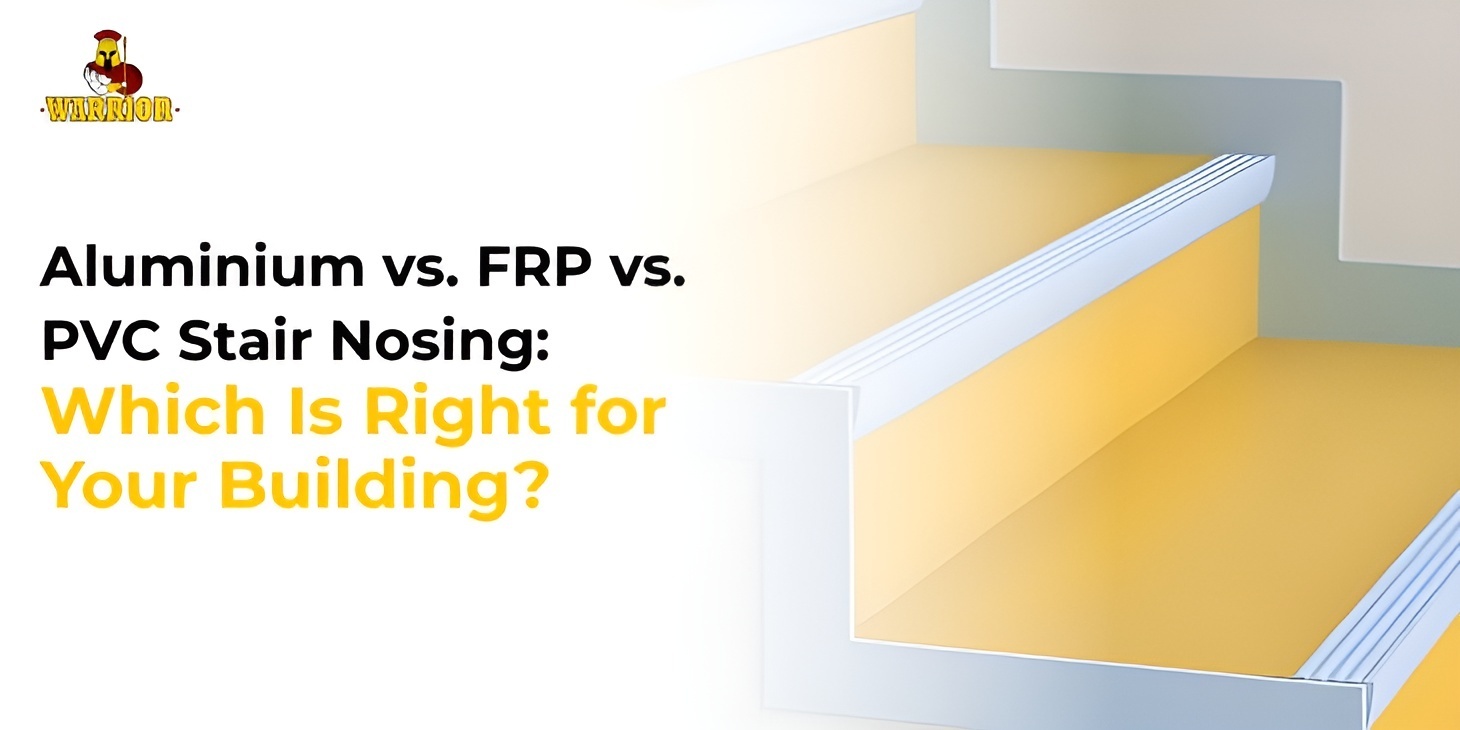
When it comes to stair safety and design in both commercial and residential spaces, stair nosing plays a critical role. It not only improves grip and visibility but also protects stair edges from wear and tear. In India’s diverse climates and varying building needs, selecting the right stair nosing material can be a tough decision.
The question is, should you go with the strength of aluminium stair nosing, the corrosion-resistance of FRP stair nosing, or the affordability of PVC stair nosing? Let’s dive into a detailed stair nosing material comparison to help you make the most informed decision for your project.
Aluminium Stair Nosing: A Blend of Durability and Design
Aluminium stair nosing is definitely a popular choice across India for high-traffic areas like malls, hospitals, educational institutions, and office complexes. Made from high-grade anodised aluminium (commonly grade T-6063), it offers excellent resistance to corrosion and wear.
What sets aluminium apart is its ability to combine structural strength with aesthetic value. It is often used in modern architectural designs where both appearance and longevity matter. These nosings are easy to install and are compatible with a wide range of flooring materials, from tiles to wood and vinyl.
In terms of aluminium vs PVC stair nosing durability, aluminium clearly offers a longer lifespan and can withstand heavy foot traffic without warping or cracking. It is a great choice where durability and a professional finish are priorities.
FRP Stair Nosing: Industrial-Grade Performance
If you are managing a facility like a manufacturing plant, chemical factory, or offshore site, FRP stair nosing (Fibreglass Reinforced Plastic) might be your best fit. It’s highly recommended for environments where exposure to moisture, chemicals, and high temperatures is frequent.
One of the major benefits of FRP stair nosing for industrial use is its excellent slip resistance. It’s built to handle extreme conditions and still offer safety and performance. FRP is lightweight but incredibly strong, and its corrosion resistance makes it ideal for industrial stairways, platforms, and ladders.
Also, FRP does not conduct electricity, which makes it a safer alternative in certain hazardous environments. While its initial cost might be higher than PVC, it often proves more cost-effective in the long run due to its minimal maintenance and long life span.
If you’re caught in the debate of PVC vs FRP stair nosing, FRP is generally more suitable for heavy-duty applications where safety and resistance to corrosion are vital.
PVC Stair Nosing: Budget-Friendly and Versatile
PVC stair nosing is a cost-effective and flexible option that is widely used in residential and light-commercial buildings. It’s available in various colours, finishes, and profiles, allowing architects and homeowners to match or contrast with the flooring.
One of the key PVC stair nosing advantages is its affordability and ease of installation. PVC is also moisture-resistant, which makes it a decent option for bathrooms, kitchens, and other wet areas. However, it may not hold up as well as aluminium or FRP in areas with constant or heavy foot traffic.
Compared to aluminium, aluminium vs PVC stair nosing durability shows a clear distinction, PVC may crack or deform over time, especially under heavy use or direct sunlight. Still, for smaller projects or areas with lower footfall, PVC provides a functional and budget-friendly solution.
Stair Nosing Material Comparison: Key Factors to Consider
To make an informed choice, it’s important to look at a few critical factors. A comprehensive stair nosing material comparison involves assessing your environment, safety requirements, aesthetics, and budget.
1. Environment
Your setting will heavily influence your choice. If the stair nosing is for an industrial plant, go for FRP. In modern offices or commercial buildings with high foot traffic, aluminium is ideal. For budget-limited residential projects, PVC is sufficient.
2. Durability
In the long run, aluminium stair nosing tends to outperform others in terms of wear resistance. FRP stair nosing is equally tough, especially in harsh environments. PVC may not offer the same level of durability but works fine in light-use scenarios.
3. Maintenance
Both aluminium and FRP require minimal maintenance. They are resistant to rust, corrosion, and do not fade easily. PVC, however, may require periodic replacement in high-traffic zones, especially where temperatures fluctuate.
4. Aesthetic Requirements
If aesthetics matter, aluminium and PVC offer more design flexibility. Aluminium provides a sleek, modern finish, while PVC comes in different colours and textures. FRP is more utilitarian and often prioritizes function over form.
How to Choose Stair Nosing Material: A Step-by-Step Guide
Still unsure how to choose stair nosing material for your building? Here’s a practical approach to make the decision easier:
- Assess Foot Traffic: High foot traffic? Choose aluminium or FRP. Low traffic? PVC might do.
- Evaluate Environment: Chemical or industrial settings require FRP. Wet areas like kitchens may suit PVC.
- Budget Constraints: Working on a tight budget? PVC offers affordability. Looking for long-term savings? Aluminium or FRP are better.
- Safety Standards: Slip resistance, flame retardance, and other safety factors should not be overlooked, especially in public and industrial spaces.
Understanding these elements will help you narrow down the most appropriate stair nosing material for your specific application.
Choosing Warrior for Quality Stair Nosing Solutions
At the end of the day, the right stair nosing enhances safety, boosts visual appeal, and ensures long-term value. Whether you are working on a large-scale industrial facility or a modern residential space, it’s important to trust a reliable provider.
Warrior offers a comprehensive range of aluminium stair nosing, FRP stair nosing, and PVC stair nosing products tailored for various environments and requirements. With a strong presence in the Indian market, Warrior ensures quality, durability, and expert support.
Visit our stair nosing solutions page to explore the full product range and discover why architects, builders, and facility managers across India trust Warrior for all their stair safety needs.