


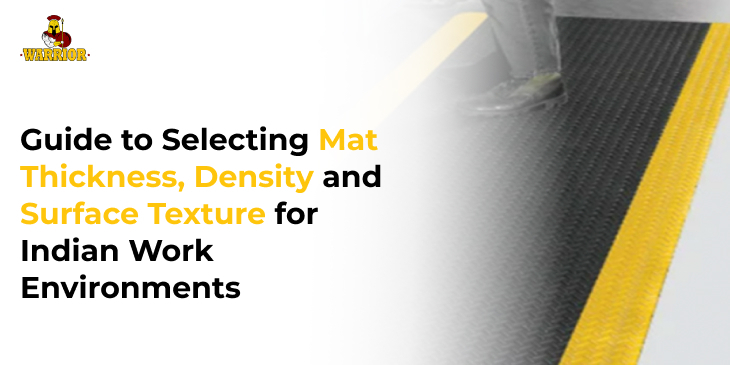
Standing for long hours on hard concrete or tiled floors can cause sore legs, tired backs, and even slips. That is why choosing the right mat for your workplace matters so much. The right balance of thickness, density, and surface texture can improve comfort, reduce accidents, and make daily tasks smoother.
This guide looks at how to match floor mats with the unique needs of Indian work environments.
Why Do Workplaces in India Need Special Mats?
Many workplaces in India are busy, loud, and often crowded. From large industrial plants to small kitchens, employees spend hours on their feet. Hard surfaces like stone or concrete floors provide little support. Over time, workers can feel aches, joint pain, or fatigue. Special mats are designed to reduce these problems.
One big benefit is safety. Workspaces often deal with spills, dust, or grease. A rubber hollow mat with drainage holes can stop water or oil from pooling, helping workers avoid slips. In kitchens or workshops, a hollow mat provides grip and allows spills to pass through quickly.
Comfort is another key factor. ANTI-FATIGUE MATS cushion the feet and encourage small movements in the legs. These small shifts in posture help keep blood moving and reduce tiredness.
Durability is also important. Workplaces need mats that can handle heavy loads, carts, or machinery. A PVC floor mat or PVC flooring mat is strong and resistant to wear. For heavy-duty areas, some companies choose Rubber SHEETS or RECYCLED RUBBER PAVERS that can take pressure from tools and equipment.
Let’s look at the common reasons why Indian workplaces depend on mats:
- Health: Standing all day on hard floors leads to pain and long-term injury.
- Safety: Slips and falls are common in wet or oily conditions.
- Durability: Mats must hold up to traffic, spills, and cleaning.
- Hygiene: Some mats are easier to wash and dry, which helps in food or medical areas.
- Versatility: Options like PVC matting for the floor and RECYCLED RUBBER TILES fit both small offices and big factories.
India’s wide range of industries—food processing, textiles, electronics, and more—means one type of mat will not work everywhere.
Each setting demands the right thickness, material, and texture. That is why understanding these basics is so important before making a choice.
What Makes a Mat Comfortable or Safe?
Comfort and safety may sound simple, but they depend on several factors. The material, thickness, and surface design of a floor mat all change how it feels underfoot and how it performs during daily use.
Thickness
Thicker mats usually feel softer and give more cushion. This helps workers who stand in one place for long periods. Thin mats may be lighter and easier to move, but they may not provide enough support. The right choice depends on how long people will stand and what kind of shoes they wear.
Density
Density means how firm or soft the mat feels when you step on it. A mat that is too soft can feel unstable, while one that is too hard may not reduce fatigue. Good ANTI-FATIGUE MATS find a balance. For example, PVC FLOORING MAT or Rubber SHEETs can offer medium firmness that holds up well under pressure while still giving comfort.
Surface Texture
The surface design affects both grip and cleaning.
- Smooth surfaces work better in offices or labs where hygiene and rolling chairs matter.
- Textured surfaces like BUTTON SHEET patterns provide extra traction.
- Drainage styles like the RUBBER HOLLOW MAT or hollow mat let liquids flow through, keeping the surface dry and safer.
Material Choices
- PVC floor mat or PVC matting for floor: Good for light industrial or office areas; strong, easy to clean, and resistant to chemicals.
- Rubber SHEETS: Popular in workshops for grip and durability.
- RECYCLED RUBBER PAVERS or RECYCLED RUBBER TILES: Eco-friendly and tough, often used outdoors or in heavy-duty zones.
Key Benefits of Safe and Comfortable Mats
- Protect joints and muscles from stress.
- Lower accident risk from slipping.
- Create cleaner and more organized workspaces.
- Support different types of jobs, from standing desks to kitchens.
In short, a mat becomes “comfortable” when it supports workers without making them wobble or sink. It becomes “safe” when it reduces the chance of slipping, tripping, or wearing out quickly. Both features are essential in any Indian workplace.
How to Select Mat Thickness, Density, and Surface Texture for Indian Work Environments
Choosing the right mat is not always simple. Workplaces in India vary from small offices to big food plants and noisy factories. Each one has different needs. That means one type of floor mat will not suit all.
To make the best choice, it helps to look at three main features: thickness, density, and surface texture.
1. Thickness: How Thick Should a Mat Be?
Thickness affects comfort, stability, and safety. If a mat is too thin, it may not provide enough cushion. If it is too thick, it may feel unstable or create trip hazards at the edges. The goal is to find a balance.
- Thin mats (8–10 mm):
- Work well in kitchens, food prep areas, or spaces where liquids often spill.
- Easier to clean and safer for carts to roll over.
- A rubber hollow mat in this thickness range gives a strong grip and lets water or oil drain away.
- Work well in kitchens, food prep areas, or spaces where liquids often spill.
- Medium mats (12–15 mm):
- Best for standing desks, light industrial use, and assembly lines.
- Provide more support than thin mats, but are still stable underfoot.
- A PVC floor mat or PVC flooring mat is often available in this size, making it good for workers who stand most of the day.
- Best for standing desks, light industrial use, and assembly lines.
- Thick mats (18–20 mm):
- Ideal for long hours of standing in one spot, such as inspection work.
- Offer maximum cushioning and reduce leg and back strain.
- Work best in dry areas where rolling carts are rare.
- Ideal for long hours of standing in one spot, such as inspection work.
Quick tip: Before choosing, think about the kind of shoes workers wear. Hard-soled safety boots often need softer mats, while softer shoes may work better on firmer mats.
2. Density: How Firm Should a Mat Feel?
Density is how firm or soft the mat feels when you step on it. It also tells you how well the mat will hold up after months of use. A dense mat does not sink too much under weight. A soft mat may feel nice at first, but it can wear out quickly.
- Soft density:
- Feels comfortable right away.
- Works well in light-use areas or offices where people stand for short periods.
- A PVC matting for the floor is often softer and suited for lighter tasks.
- Feels comfortable right away.
- Medium density:
- Balances comfort and durability.
- Good for most industrial and commercial spaces where workers stand for many hours.
- A hollow mat or PU foam mat usually falls in this range.
- Balances comfort and durability.
- High density:
- Very firm and long-lasting.
- Better for heavy-duty use in factories or workshops.
- These mats may not feel “soft,” but they support the body well over time.
- Very firm and long-lasting.
Practical example: In a busy assembly line, medium-density mats are best because they last long and still feel comfortable. In a lab or office, softer mats may be fine since the work is lighter.
3. Surface Texture: How Should the Top Look and Feel?
Surface texture is about grip, drainage, and ease of cleaning. The right texture depends on the type of work being done.
- Smooth surface:
- Best for offices, labs, or cleanrooms where rolling chairs or carts are used.
- Easy to mop and keep clean.
- Works well in areas with low risk of spills.
- Best for offices, labs, or cleanrooms where rolling chairs or carts are used.
- Textured surface:
- Adds grip for shoes.
- Safer in light industrial areas where workers move quickly.
- Patterns like ribs or small circles help prevent slipping.
- Adds grip for shoes.
- Drainage surface:
- Designed with holes or open patterns.
- Perfect for wet or oily areas like food prep stations, canteens, or machine shops.
- A rubber hollow mat is the classic example. Its holes let liquids drain through, keeping the top surface drier and safer.
- Designed with holes or open patterns.
4. Matching Mats to Work Environments
It helps to match the mat’s thickness, density, and texture to the type of work.
- Offices and Reception Areas:
- Choose medium-thickness mats with smooth surfaces.
- PVC floor mat or PVC flooring mat works well because it is easy to clean and durable.
- Choose medium-thickness mats with smooth surfaces.
- Food Prep and Kitchens:
- Go for thinner mats (8–12 mm) with drainage holes.
- A hollow mat or a rubber hollow mat keeps floors safe by draining liquids.
- Go for thinner mats (8–12 mm) with drainage holes.
- Factories and Workshops:
- Pick medium-to-thick mats (12–18 mm) with textured surfaces.
- PVC matting for the floor or high-density rubber mats last longer and handle heavy use.
- Pick medium-to-thick mats (12–18 mm) with textured surfaces.
- Labs and Medical Facilities:
- Smooth-surfaced mats for easy cleaning.
- Medium thickness for comfort without tripping risks.
- Smooth-surfaced mats for easy cleaning.
5. Key Points to Check Before Buying
When shopping for mats, here are the important details to look for:
- Material type: Is it PVC, rubber, or PU foam?
- Thickness: Does it match the hours of standing and type of footwear?
- Density: Is it firm enough to last but still comfortable?
- Surface texture: Will it provide the right grip or drainage for your work area?
- Ease of cleaning: Can it be washed with water or chemicals used in your workplace?
- Durability: Does it resist cuts, heat, or oil if needed?
6. Simple Buyer’s Checklist
Here’s a quick way to make sure you select the right mat:
- Do workers stand all day? → Choose medium-to-thick mats with good density.
- Is the floor often wet? → Pick a rubber hollow mat or drainage-style mat.
- Do carts roll over the area? → Use thinner, smoother mats that reduce tripping.
- Do you want eco-friendly options? → Look at recycled rubber mats.
- Do you need chemical resistance? → A PVC floor mat or rubber mat may be the best fit.
Conclusion
Choosing the right mat for Indian work environments means thinking about comfort, safety, and durability all at once. The right floor mat helps workers feel less tired, reduces accidents, and keeps the workplace cleaner.
A poor choice leads to quick wear, unsafe conditions, and higher costs over time. Investing in the right mat may look small, but it creates real value in safety and comfort.
For reliable and high-quality solutions, explore the options at Warrior WPS today and give your workplace the support it deserves.
FAQs
What is the best thickness for mats in busy workplaces?
Most workplaces do well with mats between 12 mm and 20 mm. Thicker mats offer more comfort for long hours, while thinner ones suit light-duty use.
Can PVC mats handle heavy machines?
Yes, a high-quality PVC floor mat or PVC flooring mat can support carts and light machinery. For very heavy use, rubber or recycled mats may last longer.
Do mats help with wet areas in kitchens?
Yes, hollow mat or RUBBER HOLLOW MAT styles with drainage holes are excellent for kitchens, as they allow spills to flow through and improve grip.
Are recycled mats good for the environment?
Yes. RECYCLED RUBBER PAVERS and RECYCLED RUBBER TILES reuse old rubber, reduce waste, and still perform well in tough work areas.
How do I clean mats in factories or offices?
Most mats can be cleaned with mild soap and water. Drainage mats can be hosed down, while smoother mats like Rubber SHEETS are easy to mop.