

When you walk into a busy warehouse, there’s a lot going on—forklifts moving, boxes stacked high, and people on the move. In all that activity, one thing that’s easy to forget—but super important—is the floor. If the floor is slippery, accidents can happen fast.
That’s where black-and-yellow anti-slip tape comes in. It’s bold, it grabs attention, and most of all—it helps prevent slips and falls. But not just any tape will do.
In Saudi warehouses, there are certain slip-resistance standards that this tape must meet. These rules make sure the tape actually works in tough, high-traffic places.
Below is a closer look at why this type of tape is so popular, what “slip-resistance” really means, and how safety and standards come together.
Why Black-and-Yellow Tape is the Go-To for Warehouse Safety
Warehouses are full of movement. People, machines, and products all share the same space. This means the floor must be safe—all the time. One simple way to keep things safer is by using anti slip tape in areas where slips might happen.
Here’s why black-and-yellow tape is so effective:
- High Visibility: The bright yellow and black stripes stand out, even in low lighting. They catch the eye quickly, which is important in busy places.
- Signals Danger or Caution: In safety signs and colors, yellow and black usually mean “Watch out!” This makes the tape a natural choice for marking slippery zones or changes in surface height.
- Strong Grip: The surface of this black & yellow anti slip tape is textured to give shoes and wheels extra grip, even when things get wet or dusty.
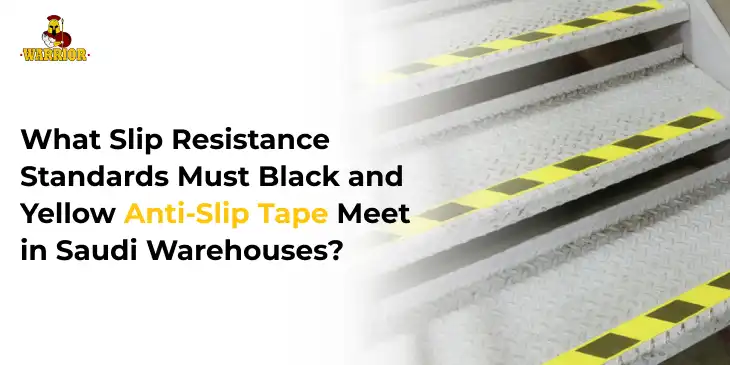
For example, you might see this kind of anti slip tape for stairs where workers go up and down quickly. Or you might spot anti slip step strips near loading docks, where slippery conditions can be dangerous.
And it’s not just warehouses—this tape is also great for ramps, metal surfaces, and even slippery concrete.
What Does Slip-Resistance Mean?
“Slip-resistance” just means how well a surface stops you from slipping.
In warehouses—especially in Saudi Arabia, where dust and sand are common—it’s important that the anti slip tape works under tough conditions. That’s why there are international standards to test how well the tape performs.
Some things that matter in slip-resistance:
- The grip level of the tape’s surface
- How it performs when wet, oily, or dusty
- Its ability to stay in place under heavy foot traffic or machinery
Good quality anti slip adhesive tape will meet strict slip-resistance ratings. Some even meet standards used in industrial safety around the world. These tapes often go through tests like the Pendulum Test Value (PTV) or the Coefficient of Friction (CoF). Don’t worry—we’ll break down what those mean later in the article.
In general: the higher the number, the better the grip.
Plus, different types of tapes are used for different jobs. You might need a photoluminescent tape for stairs if you need something visible in the dark. Or maybe LUMINESCENT ANTI SLIP TAPE for emergency exits. There’s even SHOWER & TUB ANTI SLIP TAPE for wet areas like restrooms and locker rooms.
It’s also important that the tape stays stuck. That’s why good tapes come with strong adhesive backing to keep them in place, no matter how much they’re walked on.
Slip-Resistance Standards for Anti-Slip Tape in Saudi Warehouses
When it comes to warehouse safety in Saudi Arabia, it’s not enough to just use anti slip tape—you also need to make sure it meets the right safety standards.
These standards help businesses know that the tape they’re using is strong, reliable, and safe for high-traffic environments.
What Are Slip-Resistance Standards?
Slip-resistance standards are tests and rules used to measure how well a surface stops people from slipping. In warehouses, these standards help companies choose the right tape to prevent accidents.
In Saudi Arabia, many businesses follow international safety guidelines, such as:
- ASTM (American Society for Testing and Materials)
- DIN (German Institute for Standardization)
- BS (British Standards)
These groups create test methods that check how much grip a surface has—whether it’s dry, wet, dusty, or oily.
Common Tests Used for Anti-Slip Tape
Here are two main types of tests used to check slip resistance:
1. Coefficient of Friction (CoF)
This test checks how much friction (or grip) the tape gives your shoes or wheels when moving across it. A higher CoF number means more grip.
- For warehouse flooring and stairs, a CoF of 0.6 or higher is usually recommended.
- If it’s lower than 0.5, it may be considered unsafe for some work areas
2. Pendulum Test Value (PTV)
This is another way to test slip-resistance using a swinging arm and rubber pad. The arm hits the surface, and the reading shows how much it slows down. Again, a higher number = better grip.
- A PTV of 36 or more is typically the target for good slip-resistance in dry and wet conditions.
What This Means for Tape in Warehouses
Now that we know how slip-resistance is tested, let’s talk about how this applies to different kinds of anti slip tape used in Saudi warehouses.
Warehouses need tape that works under hot temperatures, dusty floors, and heavy use. Here’s what to look for:
✔️ Strong Grip Surface
The surface should be rough enough to help shoes grip, but not so sharp that it wears out easily. Many use mineral-coated textures.
✔️ Durable Adhesive
The anti slip adhesive tape must stick well to different surfaces—like metal, concrete, or wood. It shouldn’t peel off in the heat or after heavy foot traffic.
✔️ Meets Recognized Standards
Make sure the tape meets ASTM, DIN, or BS standards. Reputable suppliers will show these ratings on their product labels or website.
Where You’ll Use It in the Warehouse
Not all areas need the same kind of anti slip tape. Here’s where you’ll commonly apply it—and what type fits best:
- Staircases: Use anti slip tape for stairs or anti slip tape for steps to prevent slips going up or down. You can also use anti slip step strips for extra coverage.
- Ramps and Loading Zones: These spots get slippery fast. Use black anti slip tape or anti slip tape yellow black for clear visibility and grip.
- Dim or Emergency Areas: In case of power failure, photoluminescent tape for stairs glows in the dark and guides workers to safety.
Important Reminders
Before applying any tape, make sure:
- The surface is clean and dry
- You apply firm pressure to stick it well
- You allow time for the adhesive to fully bond
Choosing the right tape and making sure it meets the standards can help reduce slips, protect staff, and even lower your insurance risk.
Conclusion: A Small Strip That Makes a Big Safety Difference
Black-and-yellow anti slip tape may seem simple, but in a warehouse setting, it plays a big role. It helps reduce accidents, makes walkways clear, and supports safety standards that protect workers every day.
In Saudi Arabia, where warehouse environments face both heat and dust, making sure your tape meets slip-resistance standards isn’t simply smart—it’s necessary.
Looking for anti-slip products that meet real-world demands?
Trust Warrior WPS for reliable, tested, and high-visibility safety tape solutions. Let’s make safety stick!
Frequently Asked Questions (FAQs)
1. Where should I apply anti slip tape in a warehouse?
Apply it on stairs, ramps, walkways, loading docks, and any area that may get slippery.
2. How long does anti slip adhesive tape last?
With proper installation, high-quality tape can last for several years, even in tough environments.
3. Can I use black anti slip tape outdoors?
Yes, many anti slip tapes are made to handle outdoor conditions, including heat and rain.
4. Is photoluminescent tape for stairs really useful?
Yes! It glows in the dark, making it helpful during power outages or low-light situations.
5. What makes LUMINESCENT ANTI-SLIP TAPE different?
It offers both grip and visibility in dark or emergency conditions—great for safety exits or low-lit paths.