

Every busy warehouse has one spot where speed and risk meet at the same time. The loading dock. It is the place where trucks back in, forklifts roll out, and heavy freight moves fast all day long. When the right gear is in place, that busy corner runs smoothly. When it is missing, small mistakes turn into big problems in seconds.
Choosing the right loading dock safety equipment keeps trucks steady, workers protected, and freight moving without costly stops. The trouble is that “dock safety” covers a long list of products, and they do not all do the same job.
Some hold trailers in place. Some cushion impact. Some warn drivers when it is safe to pull away. Getting the mix right for your facility takes a little planning.
A big part of that mix comes down to simple, sturdy basics like wheel chocks and dock bumpers that quietly do their job every shift. The gap between a safe dock and a costly one often comes down to a few pieces of gear most people never think twice about.
Key Takeaways
Choosing the right dock safety equipment starts with matching each product to your dock layout, the vehicles you load, and how busy your dock stays through the day. Most facilities need a core set of tools: dock levelers to bridge the gap, vehicle restraints or wheel chocks to hold trailers, dock bumpers to absorb impact, dock seals or shelters to block weather, and barriers to protect people from edges and traffic. Once you know your risks and your traffic, picking the right products becomes far easier.
| Equipment Type | Main Job | Best For |
| Dock levelers | Bridge the gap between dock and the trailer. | Any dock loading with forklifts |
| Vehicle restraints | Lock the trailer to the dock | High-traffic, high-risk docks |
| Wheel chocks | Block trailer wheels from rolling | Backup or lower-traffic docks |
| Dock bumpers | Absorb truck impact | Every dock position |
| Dock seals and shelters | Block weather and pests | Climate-controlled or outdoor docks |
| Safety barriers and gates | Protect workers from edges and traffic | Open dock doors and busy aisles |
| Dock lights and signals | Improve visibility and driver timing | Dim docks and mixed traffic |
Warrior WPS builds practical dock safety products that help busy facilities keep trailers, freight, and people protected without slowing the workday down.
What Counts as Loading Dock Safety Equipment
Dock safety equipment is the full set of tools and products that protect people, trucks, trailers, and freight around a loading dock. Some of it is built into the dock itself. Some of it is portable and moves from bay to bay. All of it works toward the same goal: fewer accidents and smoother loading.
Think of it in a few simple groups:
- Trailer control gear that keeps a truck from rolling or pulling away too soon.
- Impact protection that softens the blow when a trailer backs in.
- Access and bridging tools that let forklifts cross safely between the dock and the trailer.
- People protection like barriers, gates, and rails that guard workers near open edges.
- Visibility and communication tools that help drivers and dock crews stay in sync.
Each group solves a different problem. A facility rarely needs every single item, but most need at least one product from each group to stay safe.
Trailer “creep,” where a truck slowly inches away from the dock during loading, is widely known as one of the sneakiest dangers at a busy dock because it can happen without anyone noticing.
Why the Right Dock Safety Gear Matters
A loading dock packs a lot of danger into a small space. Heavy trucks, fast forklifts, tall stacks of freight, and workers on foot all share the same few feet of floor. When something goes wrong here, it tends to go wrong quickly.
Here are the common risks the right gear helps prevent:
- Trailer separation. A truck that pulls away too early can drop a forklift straight into the gap.
- Trailer creep and roll. Repeated forklift movement can push an unsecured trailer forward, opening a dangerous gap.
- Forklift tip-overs. An unstable or unbridged edge can send a forklift over the side.
- Falls from the dock edge. Open dock doors are a serious fall risk for workers on foot.
- Weather and slips. Rain, ice, and wind create slick surfaces and cold, rushed workers.
- Product damage. Hard impacts and rough transitions crush freight and cost money.
Beyond safety, there is the cost side. A single dock accident can shut a bay down for hours or days. Add repair bills, insurance claims, and lost shipping time, and the price climbs fast. Good equipment is far cheaper than the downtime it prevents.
There is also the matter of rules. Many regions require employers to keep docks safe under general workplace safety laws. In the United States, for example, safety agencies like OSHA expect trailers to be secured before loading begins. Meeting those standards protects your crew and keeps your facility on the right side of inspectors.
The Main Types of Loading Dock Safety Products
Before you can choose the right gear, it helps to know the full toolbox. Below are the most common loading dock safety products and what each one does. Most facilities build their setup from this list.
Dock Levelers
A dock leveler is the adjustable bridge that connects the dock floor to the trailer bed. Trailers sit at different heights, and a leveler smooths that difference so forklifts can cross safely. Levelers come in several styles, including hydraulic, mechanical, and air-powered versions. Higher-traffic docks usually lean toward hydraulic models for speed and durability.
Vehicle Restraints
Vehicle restraints are devices that physically lock a trailer to the dock. They hook onto the trailer’s rear frame, called the ICC bar, and hold it firmly in place. Restraints are the strongest defense against early pull-aways and trailer creep. Many models include lights that tell both the driver and the dock crew when it is safe to load or leave.
Wheel Chocks and Wheel Clamps
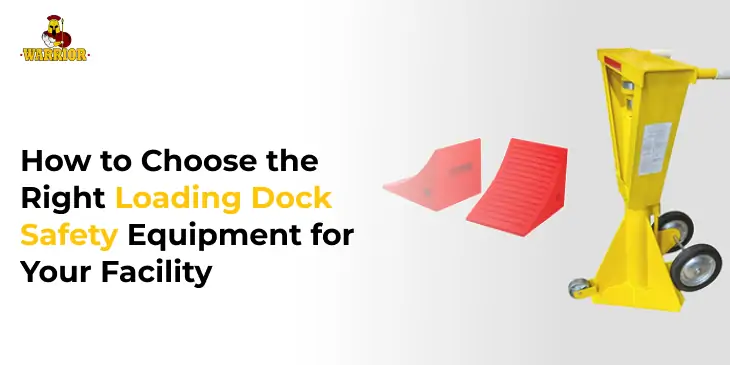
Wheel chocks are sturdy wedges placed against a trailer’s tyres to stop it from rolling. Wheel clamps go a step further and grip the tire directly. Both are simple, affordable, and reliable, which makes them a favorite for backup protection or for docks that do not have built-in restraints. Sturdy wheel chocks and wheel clamps are often the first safety upgrade a growing facility makes.
Dock Bumpers
Dock bumpers are thick pads, usually made of rubber, mounted on the face of the dock. They take the hit when a trailer backs in, protecting both the building and the truck. Worn or missing bumpers are a common cause of dock damage, so they are worth checking often.
Dock Seals and Shelters
Dock seals and shelters close the gap between the trailer and the building. They block wind, rain, dust, and pests, which matters a lot for cold storage or clean environments. They also keep workers more comfortable, which helps them stay alert and careful.
Safety Barriers, Gates, and Rails
Barriers and gates guard open dock doors and busy walkways. They stop workers from stepping off an open edge and keep foot traffic separated from forklift lanes. Guarding hard surfaces also helps, and products like foam wall padding can soften walls and columns in tight, high-traffic zones.
Dock Lights and Communication Systems
Dim docks are dangerous docks. Dock lights brighten the inside of a trailer so workers can see what they are loading. Communication systems, like red-and-green light signals, keep drivers and dock crews on the same page. When everyone knows the plan, pull-away accidents drop sharply.
Warrior WPS supplies wheel chocks, wheel clamps, trailer supports, and dock bumpers built for the heavy, repeated impact that real docks deal with every day.
Smooth, safe loading also depends on the equipment moving freight inside the building. Pairing dock gear with quality material handling equipment keeps the whole flow steady, from the trailer to the storage rack.
How to Choose Loading Dock Safety Equipment That Fits Your Operation
Now for the main question. With so many products available, how do you pick the right ones for your facility? The answer comes down to matching gear to your real conditions, not to a generic checklist. Work through the factors below in order, and the right setup will start to take shape.
- Assess your dock layout and configuration. Start by looking at what you already have. Are your docks flush with the wall, recessed, or open-air? How many bays do you run? A recessed dock with built-in levelers has different needs than an open platform. Map your layout first so every purchase fits the space.
- Match equipment to your vehicles and trailers. Different trucks call for different gear. Standard trailers with ICC bars work well with vehicle restraints. Trailers with unusual frames, air-ride suspension, or intermodal containers may need wheel chocks as a backup. Note the range of vehicles that visit your dock, then choose gear that handles all of them, not just the common ones.
- Factor in your traffic volume. A dock that turns over a few trucks a week has different needs than one running dozens a day. High-traffic docks benefit from fast, powered, built-in systems that crews do not have to set by hand each time. Lower-traffic docks can often rely on simpler, portable tools without slowing down.
- Consider your climate and environment. Cold, wet, or windy sites need weather protection like seals and shelters, plus chocks and restraints rated for slick surfaces. Facilities that handle food, pharmaceuticals, or sensitive goods need tighter seals to keep the environment controlled. Match your gear to the conditions it will face.
- Prioritize trailer restraint. If you fix only one thing, fix trailer control. Securing the trailer prevents the most serious dock accidents. Decide early if your risk level calls for full vehicle restraints, dependable wheel chocks, or both working together. This choice shapes much of the rest of your setup.
- Check safety standards and compliance. Look up the workplace safety rules that apply in your region and industry. Many require secured trailers, guarded edges, and clear signals before loading. Choosing equipment that meets or beats those standards keeps your crew safe and your facility ready for any inspection.
- Plan for durability and maintenance. Dock gear takes a beating. Pick products built with heavy-duty materials that can handle daily impact and hold up over years, not months. Also think about how easy each item is to inspect, clean, and repair. Cheap gear that fails fast costs more in the long run.
- Balance budget with long-term value. Budgets are real, and not every facility can buy everything at once. Rank your purchases by risk. Trailer restraints, bumpers, and edge protection usually come first because they prevent the costliest accidents. Add seals, lights, and extras as budget allows. The goal is smart spending, not the biggest cart.
- Think about visibility and communication. Even great gear fails if people cannot see or coordinate. Add dock lights for dim trailers and clear signal systems so drivers and crews always know the plan. Good communication ties every other safety tool together.
Work through these nine factors, and you will end up with a dock setup that fits your building, your trucks, and your team, instead of a random pile of products that looked good on paper.
Wheel Chocks vs. Vehicle Restraints: Which Do You Need?
This is one of the most common questions at the dock, and the honest answer is that many facilities use both. Still, it helps to see how they compare so you can decide where to put your money first.
| Feature | Wheel Chocks | Vehicle Restraints |
| How they work | Wedge against the tire to block rolling | Hook the trailer frame and lock it to the dock |
| Strength of hold | Good | Very strong |
| Cost | Lower, budget-friendly | Higher, larger investment |
| Setup | Manual, placed by hand | Often automatic or powered |
| Best use | Backup, lower traffic, odd trailers | High traffic, high risk, standard trailers |
| Weather sensitivity | Can slip on ice without good grip | Less affected once locked |
Here is a simple way to decide. If your dock runs constant, heavy traffic with standard trailers, lead with vehicle restraints and keep chocks as backup. If your dock is smaller, handles a wide mix of trailer types, or works with a tighter budget, quality wheel chocks can carry much of the load. Many well-run docks layer both, so if one system misses, the other still holds.
Pairing a restraint with a chock is widely seen as a smart “belt and suspenders” habit, since two independent holds are far harder to defeat than one.
How to Choose the Right Wheel Chocks
Wheel chocks look simple, but picking the right ones makes a real difference. A chock that is too small or made of the wrong material can slip when you need it most. Here is how to choose well.
- Match the size to your tires. Bigger, heavier trailers need taller, wider chocks. A chock should reach a good portion of the tire’s height to hold firmly.
- Think about your ground surface. Concrete, asphalt, gravel, and ice all grip differently. Look for chocks with textured or cleated bottoms if your surface gets slick.
- Pick the right material. Rubber, polyurethane, and steel chocks each have strengths. Rubber and urethane resist weather and stay grippy, while steel handles extreme loads.
- Check the weight rating. Confirm the chock is rated for the heaviest trailer you load. When in doubt, size up.
- Add handles or connectors for easy use. Chocks that are quick to place and remove get used correctly far more often.
The best chock is the one your crew will actually use every time, so ease of use matters as much as raw strength.
A wheel chock only works if it stays in place, which is why many facilities pair chocks with bright colors and simple storage so workers never skip the step.
Common Mistakes to Avoid When Buying Dock Safety Equipment
Even careful buyers slip up. Watching for these common mistakes will save you money and headaches.
- Buying gear before checking the dock. Products that do not fit your layout end up unused. Measure and map first.
- Choosing only on price. The cheapest chock or bumper often wears out fast and needs early replacement.
- Ignoring the range of vehicles. Gear that only fits your most common truck leaves gaps when odd trailers arrive.
- Skipping edge and fall protection. Trailer control gets all the attention, but open dock edges cause serious falls too.
- Forgetting about training. Even the best equipment fails if the crew does not know how to use it.
- Overlooking maintenance needs. Gear that is hard to inspect tends to get skipped, then it fails when it counts.
- No backup plan. Relying on a single system with no fallback leaves you exposed when it breaks down.
Avoid these traps, and your investment will actually pay off in safer, smoother shifts.
Ready to upgrade your dock? Warrior WPS can help you match the right wheel chocks, restraints, and bumpers to your exact bays and trailers.
Keeping Your Dock Safety Equipment in Good Shape
Buying the right gear is only half the job. Equipment that is worn, dirty, or broken cannot protect anyone. A simple, steady routine keeps everything working.
Set a regular inspection schedule and check the basics often:
- Wheel chocks and clamps for cracks, worn grip, and missing pieces.
- Dock bumpers for flat spots, tears, or loose bolts.
- Vehicle restraints for smooth movement and clear signal lights.
- Levelers for steady operation and safe locking.
- Barriers and gates for solid mounting and easy movement.
Beyond scheduled checks, encourage your crew to report anything that looks off right away. A quick fix today prevents a shutdown tomorrow. Keep a small log of inspections and repairs, since it helps with both safety and compliance.
Good habits also protect your budget. Regular cleaning and small repairs stretch the life of every product, so you replace gear on your schedule instead of after a failure. Steady care turns a one-time purchase into years of reliable protection.
Conclusion
A safe loading dock does not happen by accident. It comes from choosing the right loading dock safety equipment, matching each product to your building, your trucks, and your team, and keeping it all in good shape.
Start with trailer control and edge protection, add impact and weather protection, and round it out with clear lights and signals. Get those pieces right, and your busiest corner becomes one of your safest.
The best part is that you do not have to figure it all out alone. When you are ready to build a dock setup that truly fits your facility, Warrior WPS can help you pick gear that works as hard as your crew does.
Frequently Asked Questions
Should I use wheel chocks with jack stands?
Yes, they do different jobs and work well together. Wheel chocks stop the trailer from rolling, while jack stands or trailer supports keep the trailer nose from tipping or dropping when it is disconnected from the truck.
How often should I inspect loading dock safety equipment?
A quick visual check works best daily or at the start of each shift, with a deeper inspection scheduled weekly or monthly. High-traffic docks and heavy-impact gear like bumpers and restraints usually need more frequent attention.
Do I still need wheel chocks if I have vehicle restraints?
In many cases, yes. Restraints are the primary hold, but chocks add a reliable backup for odd trailer types, restraint failures, or trucks that do not fit the restraint hook.
Can dock safety equipment hold up in freezing or wet conditions?
It can, as long as you choose gear rated for those conditions. Look for chocks with strong grip surfaces, weather-resistant materials, and seals or shelters that block wind, rain, and ice at the dock opening.
Is professional installation required for dock levelers and restraints?
Built-in equipment like levelers and permanently mounted vehicle restraints usually calls for professional installation to ensure they are safe and code-compliant. Portable items like wheel chocks and freestanding barriers can typically be put to use right away.